Coping with grief after a diagnosis: emotions and support
A diagnosis can bring grief before a loss has happened. Coping with grief after a diagnosis means making room for the sadness, fear, anger, or uncertainty that can follow major changes, without expecting those feelings to arrive in a particular order. You may also feel hope, or even moments of joy, alongside the grief.
If your emotions feel unpredictable or hard to explain, that doesn’t mean you’re handling the news badly. Grief is personal, and there’s no single right way to respond. This article explores what grief after a diagnosis can feel like and how self-kindness can help on difficult days.
You’ll also learn about anticipatory grief, which can begin when you mourn a possible future loss, and how talking with trusted people or a counselor may help. We’ll look at practical ways to process emotions, adapt to change, and find support without rushing yourself toward acceptance.
Table of Contents
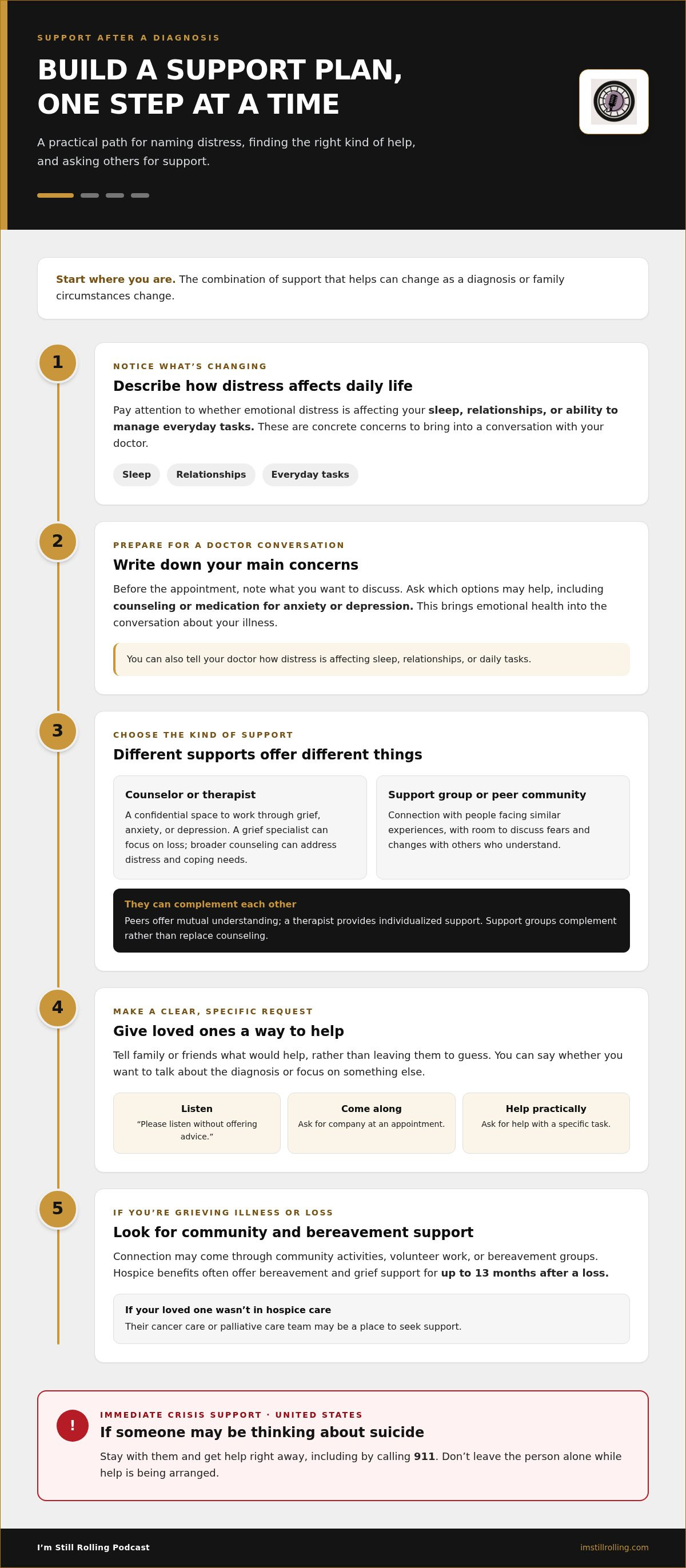
Finding support groups, counseling, and crisis support
Support can come from trained counselors, peers who understand illness, and loved ones who listen. The right combination may change as your diagnosis or family circumstances change.
Counseling and Therapy Options
Counseling offers a confidential space to work through grief, anxiety, or depression connected with illness. It can be especially helpful when emotions feel overwhelming or interfere with daily life. A therapist specializing in grief can focus on loss, while broader counseling can address distress and coping needs. Counseling and medication are among the approaches that may help with depression during grief.
Support Groups and Peer Communities
Support groups bring together people facing similar experiences, while peer communities offer connection through shared understanding. After a diagnosis, they can give you room to discuss fears and changes with people who recognize the strain. Groups complement rather than replace counseling: peers offer mutual understanding, while a therapist provides individualized support. You can also ask friends or loved ones for specific help, such as company at an appointment.
Discussing Emotional Distress with a Doctor
Tell your doctor how distress affects your sleep, relationships, or ability to manage everyday tasks. Before the appointment, write down your main concerns and ask which options may help, including counseling or medication for anxiety or depression. This makes emotional health part of the conversation about your illness, rather than something you have to carry alone.
Be direct with family and friends about what would help. For example, ask someone to listen without offering advice, accompany you to an appointment, or help with a practical task. Clear requests give loved ones a way to support you without guessing. You can also tell them whether you want to talk about the diagnosis or focus on something else.
If you’re grieving someone’s illness or death, connection can also come through community activities, volunteer work, or bereavement groups. Hospice benefits often offer bereavement and grief support for up to 13 months after a loss. If your loved one wasn’t in hospice care, their cancer care or palliative care team may be a place to seek support.
For immediate crisis support in the United States, reach out for urgent help. If someone may be thinking about suicide, stay with them and get help right away, including by calling 911. Don’t leave the person alone while help is being arranged.
Common grief emotions, thoughts, symptoms, and behaviors
Grief after illness can show up as emotional shifts, difficult thoughts, and changes in sleep. Recognizing these responses can help you describe your experience without judging it.
Emotional Responses to Serious Illness
Emotional responses are feelings that arise as illness changes your health, routines, or expectations. Anger, sadness, fear, and sorrow can each point to a different loss or unmet expectation. You might feel angry about a changed routine, then afraid of an upcoming appointment. Sadness and hope can coexist; one feeling doesn’t cancel out the other.
Acknowledging Difficult Feelings
Acknowledging difficult feelings means noticing and naming emotions instead of insisting they disappear. Facing painful or frightening emotions during serious illness may help ease stress and suffering, and support coming to terms with the condition. Try naming what’s present: “I’m afraid of what may change,” or “I’m sad about needing help.” The words don’t have to solve anything.
Exploring and Expressing Emotions
Exploring emotions means getting curious about what a feeling may be connected to; expressing them gives the experience a voice. For example, write a few lines after a difficult medical conversation, or tell someone you trust what felt hardest. Anger may connect to lost independence, while sorrow may reflect a change to a valued activity. These examples can make an unsettled response easier to understand.
Grief-Related Thoughts and Behaviors
Grief-related thoughts and behaviors are changes in attention, sleep, or daily habits that accompany emotional strain. During the first few months of grief, difficulty falling asleep and waking early are common. You might also find it harder to concentrate on a familiar task, such as reading a message. Noticing when these changes occur gives you concrete details to share when discussing your mental health.
Grief doesn’t follow a straight line. Emotions can return in waves, including after a new health concern or an appointment. The five stages associated with psychiatrist Elizabeth Kübler-Ross are a model, not a required sequence. You may not experience every stage, or may experience them in another order. A hopeful day, for instance, can be followed by sadness. That shift is part of an individual response, not evidence of failure.
Practical steps for managing illness-related grief
Grief can return as a chronic condition changes your routines, abilities, or expectations. Practical coping means responding to the loss in front of you, then adjusting as your needs change.
Grief After a Chronic Illness Diagnosis
Grief after a chronic illness diagnosis involves mourning changes to your health, identity, or everyday life while adapting to a new normal. Chronic conditions can last a long time, and treatment may manage symptoms rather than cure the condition. A new health issue can bring grief back, so it may help to build coping tools you can use again as circumstances shift.
Depression Alongside Chronic Illness
Depression and chronic illness can affect each other: depression can worsen chronic pain, and pain can add to emotional strain. Depression may also involve head, body, or stomach aches. Notice changes in pain and mood together, and describe specific examples, such as feeling lower on days when pain disrupts sleep. These details can help you explain what you’re experiencing when seeking professional support.
Try a few practical approaches, then notice which ones fit your capacity that day:
Write down facts about your health situation, such as new symptoms or questions for an appointment. Putting the facts on paper can help you acknowledge what has changed.
Take a short break from illness-related tasks when attention feels overloaded. A quiet activity can give you space to process the change before returning to a decision.
Use a grounding practice, such as meditation or deep breathing, when emotions feel overwhelming.
Plan one activity each day that brings pleasure, even if it’s listening to music or sitting outside.
Release an unnecessary obligation when your energy is limited. This might mean postponing a task that doesn’t need attention today.
Acceptance doesn’t mean feeling pleased about illness or giving up on meaningful goals. It can mean recognizing the condition as part of your current reality, while choosing how to use the tools available to you. A 1998 source on chronic pain described acceptance as predicting adjustment; accepting pain may also reduce its physical and emotional severity. This isn’t approval. It’s a way of meeting the day without spending all your strength fighting what is already happening.
If you’re supporting someone with serious illness, ask what practical help they need instead of assuming. Offer to prepare a meal, help with a household task, or listen without trying to fix the situation. Follow their lead about discussing the diagnosis, and support routines around eating, sleep, and physical activity. A direct “I’m sorry this happened” can acknowledge the difficulty without demanding a response.
Keep communication open in close relationships by naming one specific need at a time. For example, ask a loved one to sit with you after an appointment, or tell them you’d rather talk about something ordinary that evening. Grief and adaptation can coexist; small adjustments can make room for both.
Self-forgiveness and self-kindness
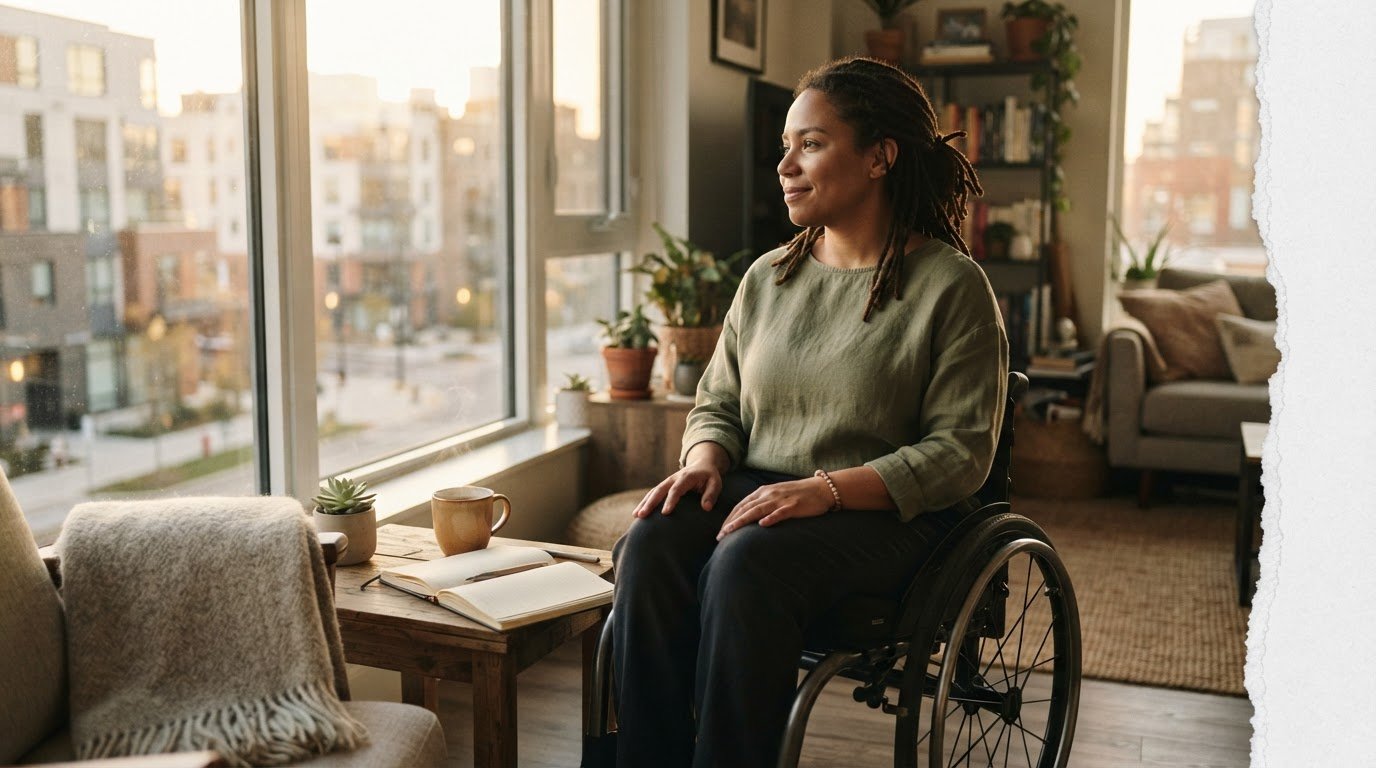
Self-kindness means meeting grief with patience instead of demanding a quick return to normal. After a difficult appointment, for example, you might choose to rest rather than take on an extra household task.
Practicing Self-Forgiveness
Self-forgiveness means releasing harsh judgment about how you responded to illness. It can help when anger or self-blame adds another burden. You might think, “I should have handled that conversation better,” then remember you were trying to absorb difficult news. Anger can also point to a loss or unmet need. Art, a conversation with a friend, or mindfulness can help you process it without turning the feeling against yourself.
Self-Kindness and Patience
Self-kindness means treating yourself with the care you’d offer someone you love. Grief can bring good days and bad days, rather than steady progress through fixed stages. If a plan feels too demanding, adjust it: prepare a simple meal, postpone a nonessential chore, or ask someone to sit with you. A hard day doesn’t erase what you managed yesterday.
Self-Compassion and Mindfulness
Self-compassion means acknowledging pain without calling yourself weak or a failure. Mindfulness can help you notice a feeling as it happens, rather than judge yourself for having it. Try pausing to take a slow breath and name what’s present, such as “I feel angry” or “I’m afraid of this change.” That brief practice can create space between an emotion and your next response.
Patients may feel pressure to stay positive for family or make every day meaningful. But allowing grief doesn’t mean giving up, and a moment of laughter doesn’t diminish what you’re facing. To manage a difficult day, choose one small act that supports your needs: take a quiet break, write down a worry, or tell someone you need company rather than advice.
Self-care can be modest and responsive. You might protect time for sleep, take a short walk when your body allows, or reduce an obligation that can wait. These choices aren’t tests of strength. They’re ways to respect your limits while deciding what matters today.
When self-blame returns, ask what you would say to a friend in the same situation. Replace “I should be over this” with a kinder, more accurate thought: “I’m still adjusting, and I can take this one day at a time.” Acceptance doesn’t require feeling happy about illness. It can simply mean making room for reality and your own humanity.
Anticipatory grief
Anticipatory grief begins when someone mourns a loss before it happens, such as after a loved one receives a cancer diagnosis. It can hold sadness, fear, tenderness, and uncertainty at once. The grief is real, even while the person you love is still here. Naming it can make room for honest conversations without treating the future as already decided.
This experience can shape ordinary moments. A family member might feel close while sharing breakfast, then feel dread before an appointment. They may worry that talking about grief means giving up hope. It doesn’t. Acknowledging what you fear can coexist with learning about the present and noticing what remains possible today.
Start with a clear description of what feels hardest. You might say, “I’m afraid of how our lives could change,” or “I feel sad about what we may lose.” Share those words with someone you trust or a counselor. Naming a particular fear, such as losing time together or changing roles, gives others a more useful way to listen and respond.
Staying present doesn’t mean avoiding practical concerns. It means making space for this day, too. Choose a shared activity that feels meaningful, such as cooking a familiar meal, looking through family photographs, or asking your loved one about a memory. These moments don’t erase sadness or promise a particular outcome. They let connection exist alongside uncertainty.
Preparation can also matter. A systematic review and qualitative synthesis of 34 articles found that high pre-loss grief combined with low preparedness resulted in poorer bereavement outcomes for caregivers. This finding doesn’t prescribe one way to prepare. It does underline the value of acknowledging what lies ahead and finding support while caregiving, rather than carrying every concern alone.
Consider these ways to make room for both emotion and connection:
Set aside a calm moment to ask your loved one what they want to discuss today.
Choose one shared activity that feels manageable, then let the moment be enough.
Write down a worry before talking with a trusted person or counselor.
Ask a family member or friend for a specific form of help, such as joining you for a conversation.
Anticipatory grief isn’t a failure to stay positive, and healing doesn’t require constant optimism. Some days may hold laughter; others may bring fear back into focus. If a story from someone who has faced adversity would offer company, hear stories of resilience and life after adversity.
I'm Still Rolling Podcast: I'm Still Rolling Podcast Episodes
I'm Still Rolling Podcast shares honest conversations about resilience, disability, and life after adversity. Its episodes can offer a human perspective when illness or grief makes familiar routines feel uncertain, without suggesting that someone else’s story replaces personal or professional support.
Choose an episode when you want to hear how people have lived through difficult circumstances and found ways to keep moving forward. Podcast Transcripts offer another way to engage with these conversations, while the I'm Still Rolling Newsletter brings related stories to your inbox.
If these stories would be meaningful company, visit imstillrolling.com.
Make Room for the Person You’re Becoming
Coping with grief after a diagnosis isn’t about returning unchanged to a life that has shifted. It can mean discovering what deserves your attention now, what you want to protect, and which expectations you’re ready to reconsider. That understanding may emerge slowly through honest conversations and small choices that reflect who you are today.
You don’t need a polished explanation for what you’re carrying. One honest sentence shared with someone who can listen may be a beginning. If you’re looking for stories that hold hardship and resilience together, a thoughtful conversation can offer a different kind of company, leaving room for complexity rather than demanding a neat ending.
Reach out to connect with I'm Still Rolling Podcast and explore stories that speak to life after adversity. Your next step doesn’t have to answer every question. It only needs to make a little more room for what matters to you now.
Frequently Asked Questions
What Is Grief?
Grief is “deep and poignant distress caused by or as if by bereavement,” according to Merriam-Webster. It can also arise after a diagnosis, when health, independence, or expected plans change. For example, someone may grieve a future activity they can no longer count on, even while adjusting to treatment. Grief names a response to loss; it doesn’t mean you’ve stopped caring about what remains possible.
How long does the grieving process last?
There’s no fixed timetable for grieving. Its duration can depend on your relationship with the person who died, how they died, your life experiences, what death means to you, and cultural practices. Grief stages may last briefly or continue for months or years, and they don’t necessarily arrive in sequence. After illness or a diagnosis, new health changes can also bring earlier feelings back into focus.
What are common stages and emotions of grief after a serious diagnosis?
The five-stage model associated with psychiatrist Elizabeth Kübler-Ross describes one way of understanding grief, not a required path. People may feel anger, sadness, fear, or sorrow, and hope can coexist with sadness. For example, a patient might welcome encouraging news yet still feel afraid about treatment. Emotions can shift with appointments, test results, and changing expectations, rather than follow a predictable order.
How can you cope with grief after being diagnosed with a chronic or life-threatening illness?
Coping with grief after a diagnosis can start with identifying which change feels hardest today, rather than trying to solve every concern at once. You might name a lost routine, a new limitation, or uncertainty about plans, then decide what support would help with that specific issue. Keep goals flexible as your health changes. If grief becomes overwhelming or depression is part of the experience, seek professional support.
What practical steps can help manage anxiety, sadness, and uncertainty after a diagnosis?
Separate what you know from what you’re worried might happen. For example, write a confirmed treatment detail in one column and questions about the future in another, then bring those questions to an appointment. Choose one manageable activity that gives your attention a break, such as listening to music or doing a familiar hobby. These steps don’t erase uncertainty, but they can make the next decision feel more defined.
When should someone seek professional mental health support after a diagnosis?
Consider professional support when grief feels overwhelming, depression develops, or emotional distress makes everyday responsibilities harder to manage. A counselor can help you work through illness-related feelings and identify approaches suited to your needs. Tell your doctor plainly what has changed, such as struggling with usual tasks or feeling persistently low. Asking for help is appropriate even if you can’t explain exactly what you need yet.
How can family and friends support someone grieving after a diagnosis?
Ask what would help before taking action. Someone might want company during a difficult conversation, help with a specific errand, or a quiet evening without discussing illness. Listen without judgment, and avoid advice unless they ask for it. If they change the subject, follow their lead. Practical support can also mean helping protect familiar routines while leaving decisions and the pace of conversation in their hands.
What warning signs indicate depression or suicidal thoughts after a diagnosis, and where can you get immediate help in the United States?
Persistent emotional distress or depression that makes daily life difficult deserves attention; depression can also worsen chronic pain and contribute to head, body, or stomach aches. If someone may be thinking about suicide, stay with them and get help right away. The National Suicide Prevention Lifeline lists 988 as its support number. If there’s immediate danger, call 911.


Comments