Dating with a physical disability: Talk, access, and trust
Being honest about disability doesn’t mean telling a new date everything at once. Dating with a physical disability is personal: you can share what matters for the date, explain access needs and boundaries, and decide how much of your health story to disclose. You’re not obligated to answer every personal question.
It’s natural to wonder how to bring up accessibility, intimacy, or a condition that can change from day to day. These conversations aren’t a test of your worth. They’re a chance to see whether someone listens, respects your choices, and plans with you instead of making assumptions.
This article offers practical ways to talk about access, boundaries, and sex; share the work of planning dates; and discuss disability without turning a date into a medical briefing. It also covers fluctuating health, changed plans, and the trust that can grow when both people speak honestly.
Table of Contents
1. Relationships affected by chronic illness and fluctuating conditions
A chronic condition can change what a date asks of you without defining your capacity for love. Pain, fatigue, and mobility may vary, so a plan that works today might not work tomorrow. Clear communication can make those shifts easier to discuss. For example: “I’d like to meet, but I may need to shorten the evening if my symptoms rise.”
Discuss expectations and values before resentment has a chance to build. Ask what each of you wants from dating, how you prefer to handle changed plans, and what privacy means to you. If a partner’s disability begins unexpectedly after an illness or accident, a couples therapist can help you talk through needs and plan together.
Public stigma can make a relationship feel exposed. Disabled people may face assumptions that they cannot be romantic partners or that a nondisabled partner must become a caretaker. Those assumptions don’t define either person. Friends can offer perspective, but the people in the relationship decide what support and commitment mean to them.
Keep autonomy at the center. A partner can offer help, but shouldn’t make decisions about your body, access needs, or care without your consent. You might say, “Please ask before helping me transfer,” or, “I’ll tell you if I want assistance.” Respecting your answer is essential to trust.
Pay attention to how conflict affects your mental wellbeing. Shaming you for symptoms, pressuring you to ignore a boundary, or using support to control you can signal emotional harm. Name the behavior and its impact, then notice whether your partner listens and changes their actions. Affection doesn’t erase repeated disrespect.
Online dating also calls for care. The Federal Bureau of Investigation recorded 17,910 romance-scam complaints in the United States in 2024. Reported losses from romance scams in the United States totaled $672,009,052, according to the Federal Bureau of Investigation. Keep early conversations on the platform when possible, and never send money to a romantic contact.
Changing health can complicate plans, but it can also prompt honest conversations about flexibility, boundaries, and shared values. Notice whether you can adapt together without treating disability as a personal failure.
2. Communication: How do I talk about accessibility, boundaries, and sex when I’m disabled?
You can meet potential partners through work, church, volunteer groups, sports, book clubs, and meetup groups. Online dating and social media can also open doors. Include access information in your profile only if it feels useful to you. Choose spaces where conversation can grow around shared interests, not assumptions about disability.
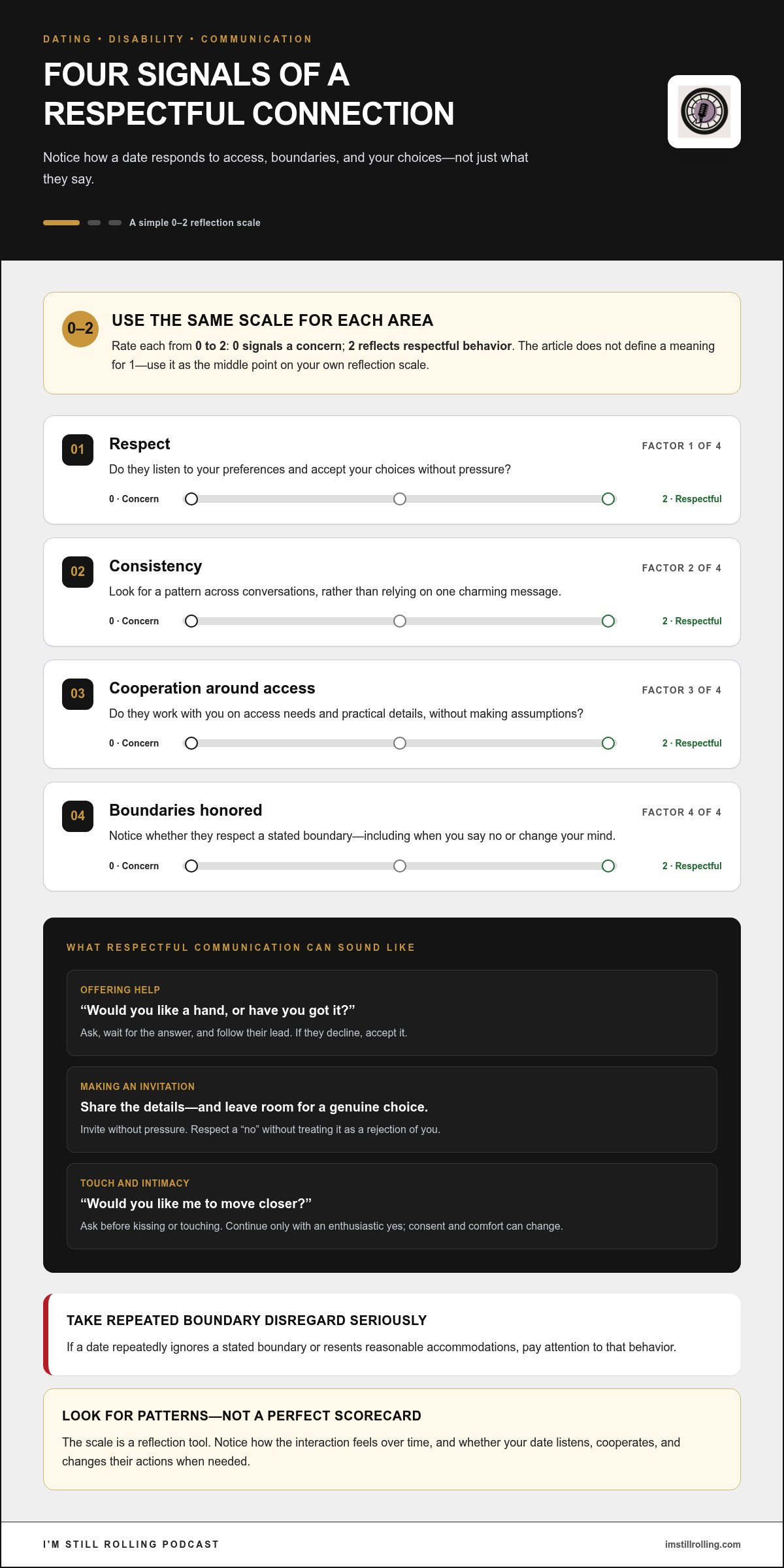
A helpful offer starts with a question: “Would you like a hand, or have you got it?” Wait for the answer and follow their lead. A disabled person is a partner, not automatically a caretaker or someone who needs rescuing. If they decline help, accept it without sulking or demanding gratitude. They can also offer emotional support, make decisions, and contribute in ways that matter to both of you.
Social invitations should leave room for a genuine choice. Instead of assuming a crowded concert would be too difficult, invite your date and share the details you know. They might suggest another venue, ask about access, or accept as planned. Respect means making invitations without pressure and hearing “no” without treating it as a rejection of you.
After an interaction, assess respect, consistency, cooperation around access, and whether boundaries were honored. Rate each area from 0 to 2, where 0 signals a concern and 2 reflects respectful behavior. Notice patterns across conversations, not just one charming message. If your date repeatedly ignores a stated boundary or resents reasonable accommodations, take that behavior seriously.
Use the language your date uses for themselves. Avoid terms like “differently abled” or “special needs” unless they choose those words. Discuss intimacy preferences and support privately, and ask before kissing or touching. A clear “Would you like me to move closer?” gives your partner room to answer freely. Continue only with an enthusiastic yes; consent and comfort can change during sex. An equal partnership means listening, communicating, and making room for both people’s needs without assigning either person a fixed role.
3. Sharing responsibility for accessible date planning
Planning can become part of the connection when both people contribute. A wheelchair user shouldn’t have to manage every detail while a date simply picks the venue. Share the research, discuss what matters, and decide together whether the plan feels romantic, practical, and comfortable.
When choosing a dating venue in the United States, look for a place that meets your access needs. For dinner, prioritize an ADA-compliant restaurant. Ask about details that could make the visit difficult, such as step-free entry, usable seating, or an accessible restroom. A venue’s general description may not answer the specific questions that matter to you.
Before a first date, agree on a familiar location or low-pressure activity, such as coffee at a café you know. Discuss transportation, the route from drop-off to the entrance, and whether you’d prefer a shorter visit. If access information is unclear, consider another setting rather than leaving the uncertainty until the day itself.
Access barriers may be invisible to an able-bodied date. A narrow path, heavy door, or long distance between parking and seating can turn an ordinary outing into a problem. Explain the impact plainly: “That entrance has steps, so let’s choose somewhere with step-free access.” This shares useful information without requiring you to defend your needs.
Make accommodations a shared task. One person can look into the venue while the other suggests an activity or route. Ask, “Would it help if I researched the entrance and seating?” Then respect the answer. You can also agree on a backup plan, such as moving indoors if bad weather affects an outdoor date.
Practical tips for dating with a physical disability include choosing a familiar place for a first date, describing the access details that matter, and planning a backup option together. Allow time for travel and recovery, too, so the date doesn’t depend on pushing through discomfort. A visible disability may prompt questions, but your date can help make access a shared consideration rather than leaving it all to you.
4. Being honest about disability when dating
Honesty doesn’t require a complete medical history on a first date. You decide what to share, when to share it, and whether a question feels too personal. For an invisible condition, try describing yourself in 15 words or less; notice whether disability feels central to how you want to introduce yourself.
When you’re ready to disclose, keep your first explanation brief and relevant to dating. For example: “I have a physical disability that affects my stamina, so I sometimes need to adjust plans.” Then explain what would make a date comfortable or accessible. This gives someone useful context without turning the conversation into a medical lesson.
Choose a moment that feels private and emotionally manageable. Before and after sharing, plan support for yourself, such as calling a trusted friend or writing down what you want to say. Sharing personal information can leave anyone feeling exposed; a thoughtful plan can help you stay grounded while the other person responds.
How should you disclose a physical disability when dating? Share the practical effect that matters now, state any boundary, and save deeper details for a time you choose. You could say, “I’m interested in seeing you, and I’d like to talk about access before we choose a place.”
In the United States, disability-focused dating apps and sites are available, as are general dating platforms where you can describe your access needs. Costs depend on each platform’s model, including whether it offers free use, paid subscriptions, or optional features. Compare what access includes before deciding.
Notice how the person responds. A respectful date listens, asks what would help, and doesn’t treat your disclosure as permission to take over. If they press for details after you’ve set a limit, you can say, “I’ve shared what I’m comfortable sharing.” Their response can tell you whether trust has room to grow.
For thoughtful stories that can put disclosure and connection into perspective, explore real disability experiences.
I'm Still Rolling Podcast: I'm Still Rolling Podcast Episodes
I'm Still Rolling Podcast shares honest conversations through I'm Still Rolling Podcast Episodes, featuring lived stories of disability, resilience, and life after adversity. If other people’s experiences help you reflect on disclosure, intimacy, or changing health, these stories can offer perspective without prescribing one way to date.
Listen when you want thoughtful company as you reflect on trust and connection in your own life. The I'm Still Rolling Newsletter offers another way to follow the show, while Podcast Transcripts let you read episode conversations at your own pace.
Explore the episodes, newsletter, and transcripts for stories that make room for complexity and individual choice. Visit imstillrolling.com to discover I'm Still Rolling Podcast.
Let Your Next Conversation Begin With You
There’s no single script for dating with a physical disability. Your next step can be small: decide what you want someone new to understand, what you’d rather keep private, and what kind of connection you want to make room for. You can revise those choices as trust develops. Your story belongs to you, even when your health or access needs shift.
If you want to hear other people’s experiences before beginning that conversation, choose a format that feels comfortable. Explore I'm Still Rolling Podcast Episodes, follow the I'm Still Rolling Newsletter, or read Podcast Transcripts at your own pace. Stories can’t make choices for you, but they can offer language and perspective as you find your own.
Visit I'm Still Rolling Podcast to explore the stories and formats available. Take the next step in a way that honors your boundaries and leaves room for genuine connection.
Frequently Asked Questions
Communication: How do I talk about accessibility, boundaries, and sex when I’m disabled?
Use direct, specific language, and make room for an ongoing conversation. For example, you might say, “I enjoy kissing, but please ask before touching my mobility aid.” When discussing sex, talk about what feels good, what causes discomfort, and how either person can pause. Consent isn’t a one-time agreement: check in as the moment changes, and share your preferences as clearly as you ask about theirs.
Navigating disclosures: When should I tell someone I’m disabled?
Choose when to disclose based on your comfort and the information needed to make a plan. If access affects the first meeting, mention the relevant detail before choosing a venue; you can keep the explanation brief. If your disability is invisible and doesn’t affect the date, you may prefer to share after trust develops. You decide how much personal or medical information to disclose.
What Makes a Good Relationship?
A good relationship makes room for both people’s individuality, needs, and ambitions. Notice whether your partner follows through, discusses disagreements without punishment, and supports your choices without taking control. For example, if you turn down an outing because you need to rest, a caring response respects your decision and helps find another way to spend time together. Mutual affection matters, as does everyday consideration.
How can couples discuss accessibility, intimacy, and support needs?
Choose a calm moment outside a date or intimate situation, then discuss one subject at a time. Each person can name what works, what doesn’t, and what they’d like to try. For instance, agree on a discreet phrase that means “pause” if fatigue or discomfort changes the moment. Revisit the conversation when needs or circumstances shift, instead of treating one discussion as permanent.
What accessibility features should I look for when choosing a date venue?
Think beyond the entrance: consider clear floor space, seating that suits your body, restroom access, lighting, noise, and distance from transportation or parking. Someone with sensory sensitivities may prefer a quieter corner; someone using a mobility aid may need room to move between tables. Venue photos can help you prepare, and a short call can clarify practical details about your planned visit.
What are common dating challenges and safety risks for people with physical disabilities?
Challenges can include inaccessible venues, intrusive questions, pressure to disclose more than you want, or a date treating help as control. For an online connection, keep early messages on the platform, and don’t send money or gift cards. For a first meeting, choose a public place, arrange your own way home, and tell a trusted friend where you’ll be. Trust your boundaries if someone pressures you.


Comments