Encouraging independence in disabled adults through everyday life skills
Independence isn’t the same as doing everything alone. Encouraging independence in disabled adults means supporting each person to make choices, pursue personal goals, and take part in everyday life with the help they need. The aim isn’t to remove support, but to create more room for autonomy and self-direction.
That distinction matters. Following a familiar routine, preparing a meal with less assistance, or choosing how to spend the day can all be meaningful steps. Progress looks different for everyone and grows through opportunities to practise, learn from experience, and decide what matters to them.
This article explores what independence can mean in daily life and how practical skills, relationships, and community participation can help build it. It also considers how accessible environments and assistive technology can make tasks easier to manage, while keeping each person’s preferences and goals at the centre.
Table of Contents
1. What are Independent Living Skills?
Independent living skills are practical abilities that help a person shape everyday life. They can include preparing a meal, managing money, doing laundry, communicating preferences, or deciding when to ask for help. For adults with intellectual and developmental disabilities, independence doesn’t mean doing everything alone. It means pursuing personal goals with support that fits.
Start with the person’s priorities. Ask what they want to learn, identify what they can already do, then break the chosen task into manageable steps. Someone learning to make lunch might first choose the food, then gather ingredients, and later practise preparing it. Regular opportunities, enough help to support success, and room to learn from experience can build skills over time.
Support should respect a person’s preferences, pace, and abilities. A caregiver may feel pressure to step in when a task takes longer or mistakes happen. But routinely taking over can remove chances to practise. Offer choices, such as what to wear or cook, and help the person understand possible consequences. This approach supports self-determination while keeping assistance available when needed.
Adaptive functioning describes how people manage everyday demands, and support needs differ. The DSM-5 describes intellectual disability severity as mild, moderate, severe, or profound based on adaptive functioning rather than IQ score. The American Association on Intellectual and Developmental Disabilities describes support needs as intermittent, limited, extensive, or pervasive. These frameworks don’t replace an individual’s goals or preferences.
In the United States, the Americans with Disabilities Act (ADA) of 1990 protects people with disabilities from discrimination, according to the U.S. Department of Justice. For questions about autonomy, privacy, and decision-making, involve the adult directly, offer meaningful choices, and respect their communication preferences. The ADA’s protection is against discrimination; it shouldn’t be mistaken for a complete explanation of every individual privacy or decision-making circumstance.
In-home support and assisted living costs depend on the type and amount of support, housing arrangements, and location. Medicaid HCBS waivers may help fund eligible community-based support, while Centers for Independent Living can help people explore independent-living skills and community resources. For students with an IEP in the United States, transition programming recommendations must be made by the time they turn 16, according to the U.S. Department of Education.
2. Relationships and community participation
Community participation gives everyday skills a social purpose. A person might volunteer, attend a recreation group, join a class, or meet friends at a familiar café. Start with an activity that reflects the adult’s interests and abilities, then plan practical details together, such as transportation, timing, and helpful support. Taking part regularly can build familiar routines and meaningful relationships.
Social skills develop through real interactions, not just instruction. At a community event, a person can practise greeting someone, taking turns in conversation, or expressing a preference. Role-playing beforehand can help, while a trusted companion can offer support without taking over. Education or social-skills programs may also help people interpret social cues, set boundaries, and respond when plans change.
Communication is central to self-advocacy. Some adults express choices through speech; others use pictures, basic sign language, or augmentative communication devices. Give the person time to communicate, offer clear options, and direct questions to them rather than to a companion. These strategies help ensure their preferences guide decisions about hobbies, friendships, outings, and the assistance they want.
Isolation can limit connection and community participation, while exploitation or unsafe living situations can put a person’s well-being at risk. Address concerns by maintaining trusted relationships, discussing personal boundaries and how to seek help, and making space for the adult to describe what feels safe or troubling. A support network should listen to the person, not speak over them.
Inclusion also depends on whether community settings welcome different ways of communicating and participating. A library group, faith community, sports activity, or volunteer role can offer a starting point; organizers can make participation more accessible by sharing plans clearly and welcoming support people when needed. To hear first-person stories of disability and resilience, consider perspectives grounded in lived experience alongside these practical strategies.
3. Accessible environments and assistive technology
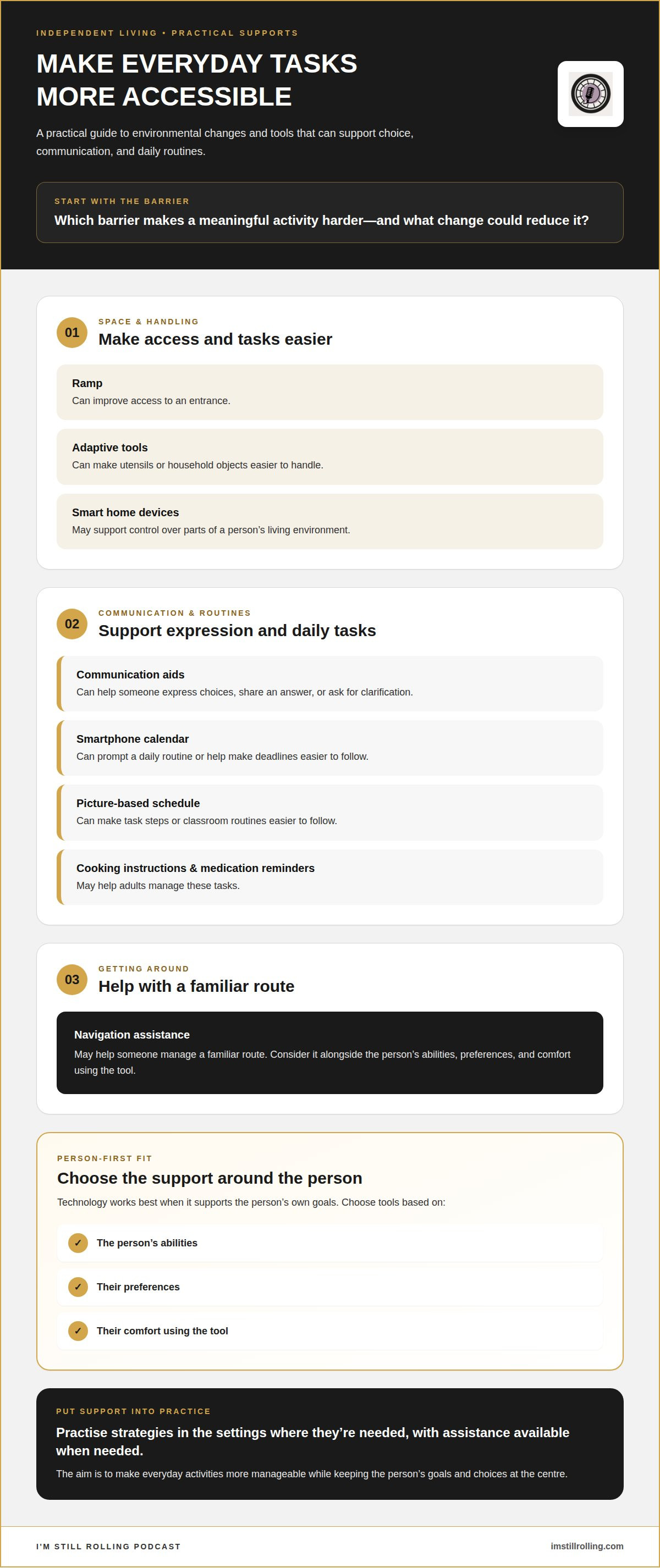
Autonomy depends partly on whether a home, classroom, or community space makes everyday tasks possible. A ramp can improve access to an entrance; adaptive tools can make utensils or household objects easier to handle. Communication aids can help someone express choices, while smart home devices may support control over parts of their living environment. Ask a practical question: which barrier makes a meaningful activity harder, and what change could reduce it?
Technology works best when it supports a person’s own goals. A smartphone calendar can prompt a daily routine, picture-based schedules can make steps easier to follow, and navigation assistance can help with a familiar route. Cooking instructions or medication reminders may also help adults manage tasks. Choose tools based on the person’s abilities, preferences, and comfort using them.
For education, accessible tools can help students take part in lessons and manage assignments. A planner, smartphone calendar, or picture schedule can make deadlines and classroom routines easier to follow. Communication aids can help a student share an answer or ask for clarification. Adults with developmental disabilities can practise these strategies in the settings where they need them, with assistance available when needed.
In the United States, Medicaid Home and Community-Based Services waivers may support eligible community-based services, including personal care. Centers for Independent Living can help adults connect with independent-living resources. The person’s support needs and chosen goals guide what kind of help is relevant. Assistive devices and environmental changes can also support daily tasks, though funding options vary by device.
Keep the person involved as tools and spaces are adapted. Invite them to try a calendar, communication aid, or kitchen tool during the activity it is meant to support. Notice whether it helps them do more themselves, express preferences, or participate in education and community life. If it creates frustration or adds steps, reconsider the choice rather than treating the device as the goal. The measure is improved access and quality of life.
4. Why independence and autonomy matter
Independence matters because it gives a person greater influence over their own life. Choosing how to spend an afternoon, which friends to see, or what goal to pursue affirms that their preferences count. Autonomy isn’t measured by completing every task alone. It means having meaningful choices and a say in the support received.
Choices can build confidence through experience. For example, an adult who decides how to take part in a neighborhood event can practise expressing preferences and responding to unexpected changes. A setback doesn’t erase the choice or the learning. Recognizing a small gain can make progress visible without turning it into a test or comparing one person’s path with another’s.
Belonging matters, too. When a person with an intellectual disability can contribute to a family decision, join a club, or choose a role in a shared activity, participation becomes more than simply being present. Their ideas have room to shape what happens. Inclusive routines help friends and family recognize the adult as a decision-maker, not just someone receiving assistance.
Supporters can protect autonomy by pausing before stepping in. Ask what the person wants, allow time for an answer, and offer assistance without assuming control. If someone is learning a new route, they might choose the destination and lead part of the journey while a trusted companion remains available. This balance respects self-direction and recognizes that support can make independence possible.
Encouraging independence in disabled adults means making room for each person’s priorities, not imposing a single model of success. One person may value more privacy at home; another may focus on education, friendships, or work. The value of encouraging independence in disabled adults lies in helping people shape lives that feel more fully their own. To hear people reflect on adversity, disability, and personal growth, listen to stories of disability and resilience.
I'm Still Rolling Podcast
I'm Still Rolling Podcast offers honest conversations about disability, resilience, and life after adversity. For readers thinking about autonomy and everyday support, these lived experiences add human context to practical guidance, showing how people describe their own goals, relationships, and challenges.
Explore I'm Still Rolling Podcast Episodes for personal perspectives, or follow the I'm Still Rolling Newsletter for more stories and reflections. Podcast Transcripts make episode conversations available in writing. These offerings share experiences and ideas; they don’t replace individual support or professional services.
If you’d like to share a perspective or ask about the podcast, you’re welcome to contact I'm Still Rolling Podcast.
Let the Next Step Be Yours
A useful next step is to give the disabled adult space to name what they want more of in life. It might be greater privacy, a new friendship, more say in daily decisions, or the chance to try something meaningful. Ask what matters to them now, listen without rushing to solve the problem, and let their answer guide the conversation. Goals can change as confidence and circumstances shift.
That principle sits at the heart of encouraging independence in disabled adults: autonomy isn’t a finish line set by someone else. It grows when a person’s preferences shape the support around them and progress is defined by what makes life feel more fully their own.
Stories can help keep that perspective human and grounded. Contact I'm Still Rolling Podcast to share a thought or continue the conversation. Every person’s path is their own, and the next step can begin with listening.
Frequently Asked Questions
What Does Independence Really Mean?
Independence means having meaningful influence over decisions and daily life, not necessarily handling every task without assistance. One adult might set weekly priorities and choose which responsibilities to manage; another might direct a support person through a task. The person’s preferences, communication, and chosen level of help define what autonomy looks like.
What are Independent Living Skills?
Independent living skills are abilities used to manage routines and respond to everyday demands. Examples include sorting mail, keeping track of personal belongings, planning a route, and recognizing when a task is becoming difficult. Choose a skill linked to the adult’s priorities, practise it in its usual setting, and adapt instructions or tools to make each step clear.
What does independence look like?
Independence looks different from person to person. One adult might decide how to organize their room, while another chooses which responsibilities to take on during a shared household task. A useful sign is that the person’s preferences affect what happens, even if someone else provides physical or communication support. The focus is meaningful control, not appearances.
Why encourage independence?
Supporting autonomy gives disabled adults more opportunity to shape decisions that affect them. Making a choice, seeing its outcome, and deciding what to do next can help a person learn what works for them. It also communicates respect: the adult is treated as someone with preferences, ideas, and contributions, rather than as a passive recipient of other people’s decisions.
What does independence mean for disabled adults, and how can they define personal goals?
It means pursuing a life that reflects personal priorities, with appropriate support. To define a goal, the adult can name something they want to change, describe what success would look like, and identify helpful assistance or tools. For example, a goal might be taking greater responsibility for a chosen household task, then reviewing progress together.
What are practical ways to support decision-making and self-advocacy for disabled adults?
Present choices in a format the person understands, such as spoken options, written notes, pictures, or a communication device. Allow time for a response, then confirm what you understood instead of deciding on the person’s behalf. Practising a simple phrase such as “I need more time” or “Please explain that another way” can help someone express preferences in everyday situations.


Comments