Explaining Invisible Illness to Family and Asking for Support
Looking well doesn’t mean feeling well. An invisible illness is a physical or mental health condition that other people can’t easily see, even when it shapes daily life. Explaining an invisible illness to family can help loved ones understand what you’re experiencing and what kind of support would make a difference.
It can be hard to describe an experience that changes from day to day, or to ask for help when your needs aren’t obvious. You don’t have to share everything, prove how unwell you are, or find the perfect words before starting the conversation.
This article explains what invisible illness can mean, offers practical ways to share your experience, and explores how to ask family for emotional and practical support. You’ll also find ways to set boundaries and make room for loved ones to listen, so the conversation can begin honestly and build understanding.
Table of Contents
1. Sharing personal experiences
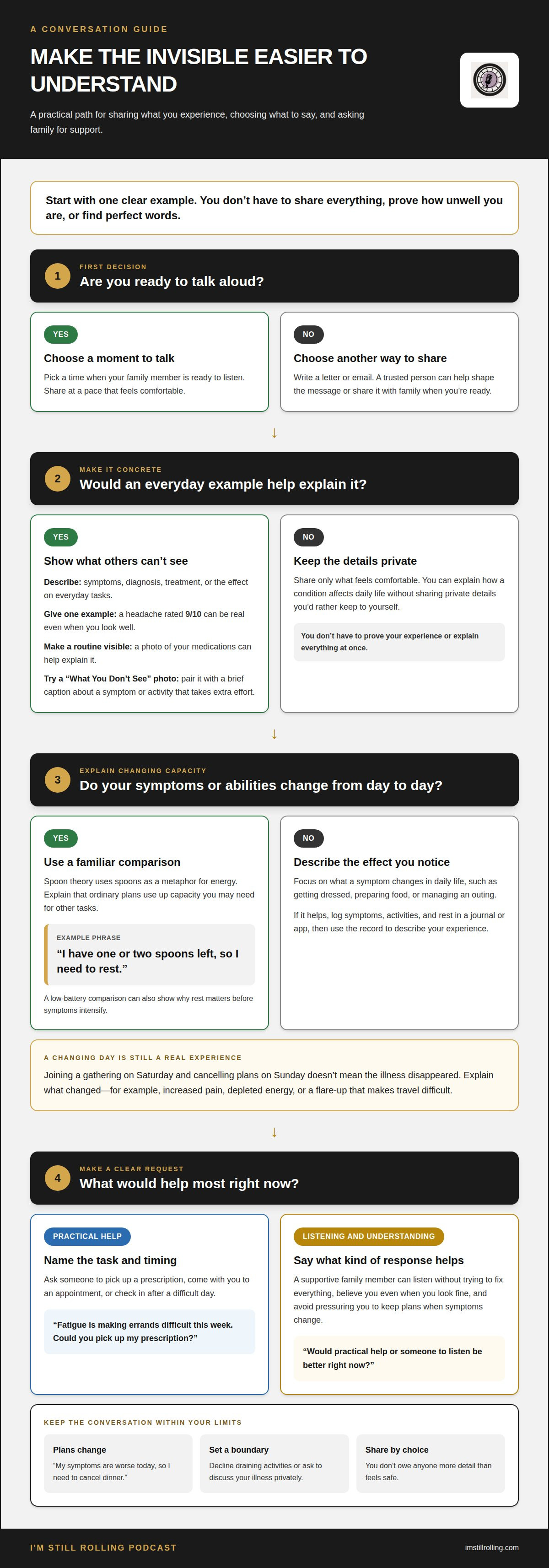
Explaining invisible illness to family members can begin with one clear example from your day. Describe what you’re going through, what others can’t see, and how it affects your energy. For instance, a headache rated 9/10 may be real even when you look well. Share only what feels comfortable, and choose a time when your family member is ready to listen.
Focus on the medical details that help loved ones understand and respond. You might explain your diagnosis, symptoms, treatments, or how symptoms affect everyday tasks. A photo of your medications can make an unseen routine more visible. You can also describe how a mental health condition affects daily life without sharing private details you’d rather keep to yourself.
A “What You Don’t See” photo can show the contrast between your appearance and your challenges. Pair it with a brief caption about a symptom or an activity that takes extra effort. If speaking feels difficult, write a letter or email instead. A trusted person can help shape the message or share it with family when you’re ready.
Spoon theory uses spoons as a metaphor for energy and can help explain why ordinary plans use up your capacity. You might say, “I have one or two spoons left, so I need to rest.” Then pause. Ask what your family already understands, listen to their response, and correct misunderstandings without feeling obliged to explain everything at once.
Make the next step specific: ask a trusted family member to read a relevant resource, come with you to an appointment, or check in after a difficult day. Personal stories can help loved ones understand what an illness feels like and how to advocate for you. Follow up later with one practical request, and remember that sharing takes courage, but educating others is your choice.
2. What is an invisible illness?
An invisible illness is a physical or mental health condition that other people can’t easily see. Examples include chronic pain, autoimmune diseases, neurological disorders, chronic fatigue, and mental health conditions. Symptoms can affect daily abilities even when someone appears well, making a family dinner or social outing harder than it looks.
Symptoms don’t always follow a steady pattern. They may come and go, change in intensity, or persist over time. For example, numbness linked with multiple sclerosis can last from a few hours to a few weeks. POTS, or Postural Orthostatic Tachycardia Syndrome, can involve dizziness, fatigue, nausea, and migraines. Someone may manage an activity comfortably one day, then struggle with the same task another day.
These changes can be difficult for family members to interpret. Someone who joins a gathering on Saturday may need to cancel plans on Sunday. That doesn’t mean the illness has disappeared or earlier symptoms weren’t real. Explain what changed, such as increased pain, depleted energy, or a flare-up that makes travel difficult. Concrete examples help loved ones understand how abilities vary.
Relatable comparisons can make invisible limits easier to picture. Spoon theory uses spoons as a metaphor for energy. You might explain that getting dressed or preparing food uses energy you need for other tasks. A low-battery comparison can also show why rest matters before symptoms intensify. To spot patterns, log symptoms, activities, and rest in a journal or app, then use the record to describe a changing week.
A mental health condition can also fluctuate, affecting work, social plans, or everyday functioning differently over time. If explaining those changes feels difficult, first-person stories of disability and resilience may offer language and perspectives that help you describe what you’re going through.
3. Asking loved ones for practical and emotional support
Make requests concrete so family and friends know what would help. You might say, “Fatigue is making errands difficult this week. Could you pick up my prescription?” Or ask someone to call after a medical appointment. Explain what you need and when, rather than hoping loved ones recognize it immediately. Writing down your thoughts first can make a vulnerable conversation easier to begin.
To explain your needs, name the challenge, its effect, and one useful response. For example: “My symptoms are worse today, so I need to cancel dinner. Please understand if plans change.” Set boundaries by declining draining activities, ending a judgmental conversation, or asking to discuss your illness privately. You don’t owe anyone more detail than feels safe.
Support also means listening without trying to fix everything. If someone with an invisible illness says they feel unwell, believe them, even if they look fine. Ask, “Would practical help or someone to listen be better right now?” Avoid pressuring them to keep plans when symptoms change, and don’t offer medical advice they may have already tried. A patient response makes room for honesty.
A trusted support community can help you feel less alone and exchange ideas for describing everyday needs. Choose a group where people respect different experiences and privacy. Counseling offers another place to practice difficult conversations, boundaries, and requests for support. A therapist can help you prepare what to say to family, then reflect on what felt useful afterward. You can also invite someone you trust to join the conversation, if that feels comfortable.
Keep requests flexible as your needs shift. One day, help with an errand may matter most; another day, a quiet check-in may be enough. Specific requests give loved ones a way to show up, while clear limits protect your energy and make support more sustainable.
4. Defining invisible illnesses and disabilities
An invisible illness is a medical condition that other people can’t easily see. It can be physical or mental, chronic or episodic, and still reshape ordinary life. Many illnesses and conditions may be invisible, from autoimmune diseases and neurological disorders to chronic pain and mental health conditions. The useful distinction is visibility: someone’s appearance doesn’t reveal the full experience or its effect on daily activities.
Invisible doesn’t mean mild, imaginary, or unchanged. Fibromyalgia, for example, can involve persistent pain, while rheumatoid arthritis is a serious systemic autoimmune disease, not simply minor aches. Fatigue can be a less visible rheumatoid arthritis symptom, yet it may interfere with routines and responsibilities. Symptoms may last from a few hours to a few weeks, come and go, or persist over time. Their visibility and intensity don’t measure how much a person is going through.
Disability describes the impact a condition can have on a person’s life, while “invisible illness” draws attention to what others may not see. A condition may affect a major area such as work, mobility, relationships, or self-care. Someone might attend a family gathering, then need substantial rest afterward. That one example doesn’t capture every day, but it shows how visible participation can coexist with real limits.
For family conversations, separate appearance from capacity. Describe the specific effect: “I can join dinner, but standing to cook is difficult,” or “My mental health affects how much conversation I can manage today.” Spoon theory can offer a metaphor for limited energy, while personal stories can put individual challenges into context. Let the person living with the condition define what their symptoms mean; don’t infer health from a smile, a diagnosis, or one good day.
To hear more lived experiences that illuminate disability and life after adversity, explore personal resilience stories.
I'm Still Rolling Podcast
I'm Still Rolling Podcast shares lived stories of resilience, disability, and life after adversity, offering perspectives that can help you feel less alone in conversations about illness. Its episodes feature honest discussions with guests who have faced challenging circumstances, including disability and caregiving. Listening may help you find words for experiences that are difficult to explain, or give trusted family members another way to understand them.
For a format that suits your needs, explore I'm Still Rolling Podcast Episodes, the I'm Still Rolling Newsletter, or Podcast Transcripts. These stories can complement a conversation with loved ones, while your own needs and boundaries remain central. If you'd like to learn more, contact I'm Still Rolling Podcast.
Let the Conversation Keep Unfolding
One conversation doesn’t have to settle every misunderstanding or define the future of a relationship. It can simply create a point of recognition: someone now knows a little more about what you carry and what respect looks like in practice. Give yourself room to notice what felt honest, what felt too exposing, and what you might want to say differently next time. Your understanding of your own limits can change, and your words can change with it.
Explaining invisible illness to family isn’t a test you pass by finding perfect language. You’re allowed to pause, return to the subject, or decide a particular conversation isn’t right for you. The next step can be small and entirely yours. Let curiosity and self-respect guide the pace, rather than pressure to make everyone understand at once.
If you’d like to connect with stories about disability and resilience, contact I'm Still Rolling Podcast. Keep moving toward the conversations and support that feel right for you.
Frequently Asked Questions
What is an invisible illness?
An invisible illness is a health condition whose effects aren’t readily apparent to other people. The term describes visibility, not severity or whether someone’s experience is valid; it can include chronic physical conditions and mental illnesses. Someone may struggle with concentration or movement without visible signs. That difference between appearance and impact can make support needs easy to overlook.
Why don’t people believe me when I say I’m struggling?
Some people rely on visible signs to judge how someone feels, so they may misunderstand symptoms they can’t observe. They might also assume that a person who managed an activity earlier can manage it again. Their reaction doesn’t determine whether your experience is real. You can name what’s happening now and what response would feel respectful, without trying to prove your pain.
Why might family members doubt or misunderstand an invisible illness?
Family members may have little experience with a condition or expect symptoms to look consistent each day. They can mistake a changed plan for lack of interest instead of a change in health. Sometimes, they simply don’t know what to ask. A calm conversation about one specific misunderstanding can clarify the impact without requiring you to explain every part of your condition.
What should I say when family dismisses my symptoms?
Try setting a direct boundary: “I need you to take me seriously, even if you can’t see what I’m feeling.” If the dismissal continues, state what you’ll do next: “I’m going to pause this conversation, and we can talk when we’re both ready to listen.” When explaining an invisible illness to family, you can choose how much to share and end a conversation that feels hurtful.
How can I explain fluctuating symptoms and energy limits to family?
Describe your capacity as something that changes, not a fixed promise. For example: “I felt able to come earlier, but my symptoms have changed, so I need to leave.” You can also tell relatives which plans have a flexible option, such as joining by phone instead of attending in person. This helps them respond to your current limits instead of assuming yesterday’s abilities still apply.
What resources help families understand invisible illnesses?
Share educational materials about symptoms and treatment, or point trusted relatives toward personal stories from people with similar experiences. A short resource can help start a conversation without making you responsible for teaching everything yourself. If you prefer, choose material together, then talk about one question it raises. Protect your privacy by sharing only what feels appropriate.



Comments