Financial planning for caregivers: managing care costs
Financial planning for caregivers starts with a clear picture of available money, potential care costs, and how caregiving could affect family income. If a loved one doesn’t have long-term care insurance, compare their resources with the care they may need, identify potential funding gaps, and explore what support may be available.
It’s understandable to put off talking about money when care needs already demand attention. But discussing finances before a crisis gives family members more room to understand the situation and make decisions together. This guide explains how to map income, assets, debts, and care expenses; organize key financial documents; and begin honest family conversations. It also covers ways to explore public benefits and other resources when insurance isn’t part of the plan, while keeping the caregiver’s financial wellbeing in view.
Table of Contents
Q: What if my parent or spouse doesn’t have long-term care insurance?
Without coverage, start by understanding your loved one’s care wishes, finances, and possible sources of assistance. A family conversation and two household balance sheets can help reveal options and funding gaps.
Personal care agreements and Medicaid
A personal care agreement documents the care tasks, payment arrangements, and understanding between a caregiver and a loved one. Putting expectations in writing can help family members distinguish paid work from informal support. Medicaid long-term care eligibility combines state and federal rules, and income and assets must meet state limits. Before relying on Medicaid, find out what the care recipient can contribute and whether they may qualify.
Caregiver and care receiver balance sheets
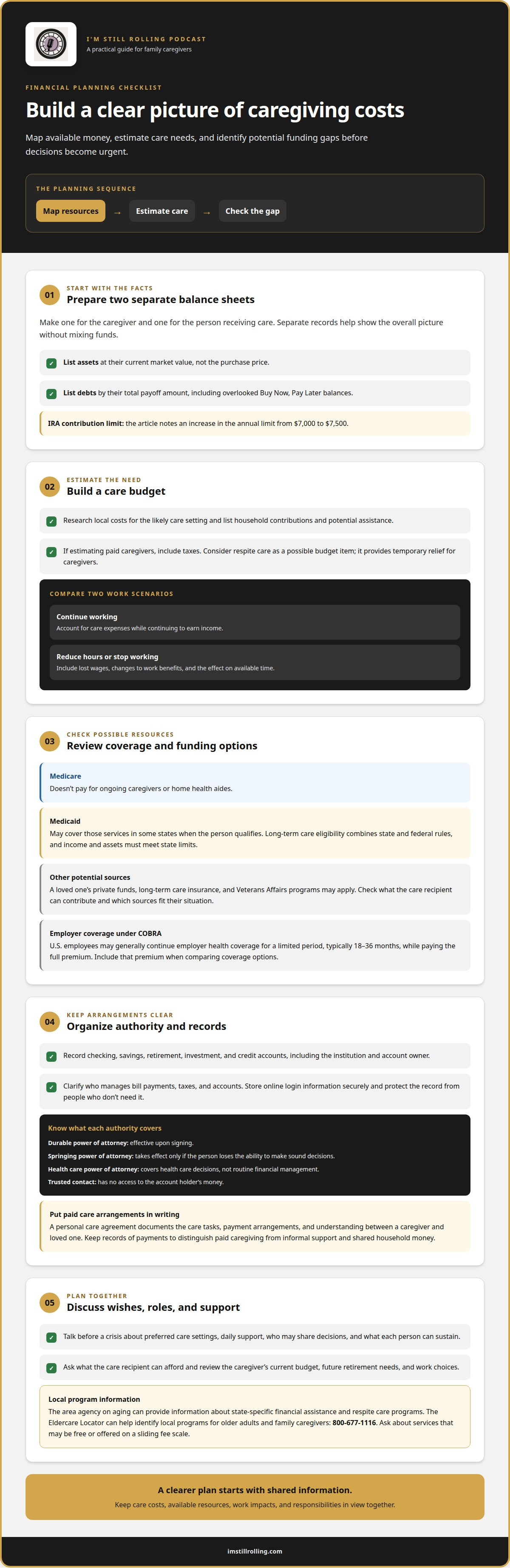
A balance sheet lists assets and debts for one person at a particular time. Prepare separate sheets for yourself and the person receiving care to see the family’s overall financial picture without mixing funds. Record assets at current market value, not purchase price, and list debts by the total payoff amount. Include overlooked Buy Now, Pay Later balances. According to the Internal Revenue Service, the limit on annual contributions to an IRA is increased to $7,500 from $7,000.
Care cost estimates and budgeting
A care budget compares expected expenses with available income and resources. Research local costs for the likely care setting, then list household contributions and potential assistance. If you’re estimating the cost of paid caregivers, include taxes. Compare a plan where you continue working with one where you reduce your hours or stop working, since each affects income and available time differently. Include respite care, which gives caregivers temporary relief, as a possible budget item.
Discuss care wishes before a crisis, including preferred settings, daily support, and which family members may share decisions. Ask what the care receiver can afford and what role each person can sustain. For state-specific financial assistance and respite care programs, contact the area agency on aging. The Eldercare Locator can help identify local programs for older adults and family caregivers at 800-677-1116. Ask about services that may be free or offered on a sliding fee scale.
How can I manage the financial aspects of caregiving?
Track caregiving’s effects on earnings alongside care expenses. Your budget should account for both immediate bills and future retirement needs.
Income and employment effects
Caregiving can change income when responsibilities lead someone to reduce hours, take unpaid leave, or leave a job. Compare two budgets: one where you continue working and pay for care, and another where you work less or stop. Include lost wages and changes to work benefits in each version. This comparison can clarify employment decisions before a change becomes urgent.
Income, insurance, and benefits
Review existing coverage and benefits before paying care expenses from savings. Medicare doesn’t pay for ongoing caregivers or home health aides. Medicaid may cover those services in some states when a person qualifies. According to the U.S. Department of Labor, U.S. employees may generally continue employer health coverage under COBRA for a limited period, typically 18-36 months, while paying the full premium. Include that premium when comparing coverage options.
Retirement income and savings
Caregiving decisions can affect retirement savings as well as current income. Set aside part of available income for savings before covering other expenses, then review contributions and beneficiaries for IRAs, pensions, and other accounts. Avoid treating retirement funds as an automatic source for care costs, since withdrawals may affect future income. A budget that protects regular saving helps show the trade-offs involved in reducing work hours.
Caregiving income sources
Potential payment sources include a loved one’s private funds, long-term care insurance, Medicaid, and Veterans Affairs programs. Determine which sources may apply and whether the care recipient can contribute. If a family member is paid from a loved one’s funds, document the arrangement and payments. Keeping records helps distinguish caregiving income from shared household money and supports clearer family decisions.
Tax filing benefits depend on factors such as the caregiver’s relationship to the person receiving care, who paid the expenses, and the loved one’s financial circumstances. Keep payment records and receipts together to assess which tax rules may apply when filing.
Powers of attorney and essential financial documents
Clear records and written authority can help caregivers manage money without confusion. Keep account information, legal documents, and assigned responsibilities organized together.
Assigning financial authority
A power of attorney names someone to act for another person within the authority granted by the document. A durable power of attorney becomes effective upon signing, while a springing power takes effect only if the person loses the ability to make sound decisions. A health care power of attorney covers health care decisions, not routine financial management. A trusted contact on a bank or brokerage account has no access to the account holder’s money.
Recording accounts and assets
A financial account record gives a caregiver an organized view of where money is held and who manages each obligation. List checking, savings, retirement, investment, and credit accounts, along with the institution and account owner. Clarify who handles bill payments, taxes, and account management so responsibilities don’t get overlooked during a difficult transition. Store online login information securely for future access, and protect the record from people who don’t need it.
Financial and estate-planning paperwork
Estate-planning paperwork records how assets should be managed or transferred and who may act in defined circumstances. Review beneficiary designations for IRAs, life insurance, pensions, and other accounts, and note any payable-on-death or transfer-on-death arrangements. A trustee can manage only money or property held in the trust, not the person’s other assets. A guardian, by contrast, is appointed by a court when it determines the person can’t manage finances.
Keep signed documents and account records in a secure, known location, and tell the appropriate family members where to find them. Include a current list of assets, debts, account contacts, and assigned responsibilities. If you’re authorized to manage a loved one’s money, keep those funds and property separate from your personal finances, act in the loved one’s best interests, and retain clear transaction records.
Starting financial caregiving conversations
Money can bring old family tensions into conversations about new care needs. A focused discussion gives family members a chance to separate practical decisions from blame, assumptions, and unspoken expectations.
Choose a calm moment before an urgent decision forces the discussion. Start with a specific concern, such as arranging help with meals or understanding how bills will be handled. Ask your loved one what matters most, then listen without treating the first answer as a final plan. A parent may value staying at home; a spouse may prioritize familiar routines. Those preferences can shape later choices.
Keep the conversation concrete rather than overwhelming. Begin with a shared goal, such as understanding monthly income and upcoming care expenses. Ask what the care recipient wants family members to know, who should take part, and what can wait. If several relatives are involved, invite them to discuss responsibilities together rather than leaving one person to carry every decision. Clear roles can reduce confusion and resentment.
Use notes to keep the discussion focused. Record decisions, unresolved questions, and who will follow up. For example, one family member might gather information about local programs while another summarizes recurring household bills. Keep your loved one involved to the extent they can participate, and revisit the plan when care needs or finances change. Regular, clear updates help everyone share the same understanding.
Some conversations will be difficult. If a loved one resists discussing money, explain the immediate reason for the conversation, such as preventing missed bills or planning support around their stated wishes. Offer choices rather than demands: discuss one expense now, or agree on a time to return to it. Respectful language keeps the focus on their agency and the decisions they want to make.
When family members struggle to find words for disability, caregiving, or changing family roles, listen to stories about caregiving that make space for lived experience. A thoughtful story can offer a starting point for a conversation, not a substitute for one.
I'm Still Rolling Podcast
I'm Still Rolling Podcast shares honest conversations that can help caregivers feel less alone in questions about care, disability, and family life. Its episodes feature lived experiences of resilience and adversity, offering perspective when financial decisions overlap with changing roles, difficult conversations, and emotional strain.
Turn to these stories for a human perspective alongside practical planning, not as a substitute for financial, legal, or caregiving assistance. The I'm Still Rolling Newsletter and podcast transcripts offer other ways to engage with the show’s conversations and revisit the experiences that resonate with you.
If these stories speak to your experience, contact I'm Still Rolling Podcast.
Let the next conversation begin with one clear step
You don’t have to settle every question before moving forward. Choose one manageable next step, such as setting a time to talk with a loved one or deciding which family member can help keep everyone informed. A small, shared action can make financial planning for caregivers feel less like a solitary burden and more like an ongoing family conversation.
Caregiving brings practical decisions and personal change into the same room. Stories from people who have lived through adversity can offer a human perspective as you find your own words and consider what matters to your family. They won’t make decisions for you, but they can remind you that every family’s experience has its own shape.
If you’d like to share your perspective or connect with the show, contact I'm Still Rolling Podcast. Keep taking the next step at a pace your family can sustain.
Frequently Asked Questions
How can I prepare for the financial challenges of caregiving?
Turn uncertain needs into a written plan with specific responsibilities. For example, note which expenses are already covered, who can help with transportation, and what changes would prompt a family review. Keep a dated record of decisions and outstanding questions. This gives relatives a shared reference when care needs shift, rather than relying on memory during a stressful moment.
Is Medicaid an answer?
Medicaid may help pay for long-term care when a person meets the income and asset limits that apply in their state. Eligibility combines state and federal rules, so families should understand the relevant limits before making financial decisions. A healthier spouse may have protections under federal spousal impoverishment rules. Medicaid is one possible resource, not automatic coverage for every family.
What if I need to transfer management of a relative’s finances to myself or a trustee?
Use the authority that matches the assets and decisions involved. A power of attorney can authorize an agent to manage specified financial matters, while a trustee manages only property held in the trust. For example, a trustee cannot manage a separate checking account simply because it belongs to the same person. A court-appointed guardian may be involved when the court determines that a person cannot manage finances.
What does financial planning for caregivers include?
A financial plan connects the care recipient’s resources, expected needs, and family decisions. Go beyond a budget by recording who handles recurring tasks, such as reviewing statements or arranging bill payments, and how relatives will share updates. Note what would prompt a review, such as a change in living arrangement or work schedule. This helps the plan stay useful as circumstances evolve.
How much does caregiving cost per year in the United States?
Caregiving costs vary widely across the United States depending on the level of care required and geographic location. That estimate is a broad reference, not a forecast for an individual household. Actual expenses depend on the care needed, paid support, travel, supplies, and changes to work. Track direct care spending and related household costs to see the financial effect more clearly.
What financial assistance and benefits are available to family caregivers?
Possible resources include a loved one’s private funds, long-term care insurance, Medicaid, and Veterans Affairs programs. An area agency on aging can explain local programs, including services offered free or on a sliding fee scale. For a veteran, the VA Caregiver Support Program can discuss eligibility for services. The right combination depends on the care recipient’s circumstances and program requirements.



Comments