Finding Joy Amidst Suffering Through Faith and Consolation
Christian joy doesn't require pretending suffering is good. Giving thanks in all circumstances doesn't mean calling illness, loss, or grief a blessing; it means holding on to God while telling the truth about pain. Finding joy amidst suffering can begin with that honest tension, not with a demand to feel cheerful.
If gratitude feels impossible in a season of sorrow, you’re not alone in wondering how faith can make room for both grief and hope. This article explores how Christian consolation can offer comfort without minimizing hardship, and how families facing illness and loss endure the slow, human work of carrying on. You’ll also find faith-based reflections on what joy can mean when circumstances remain painful. The aim isn’t to explain suffering away, but to make room for consolation, honest lament, and hope alongside it.
Table of Contents
Finding consolation in Christ in the present
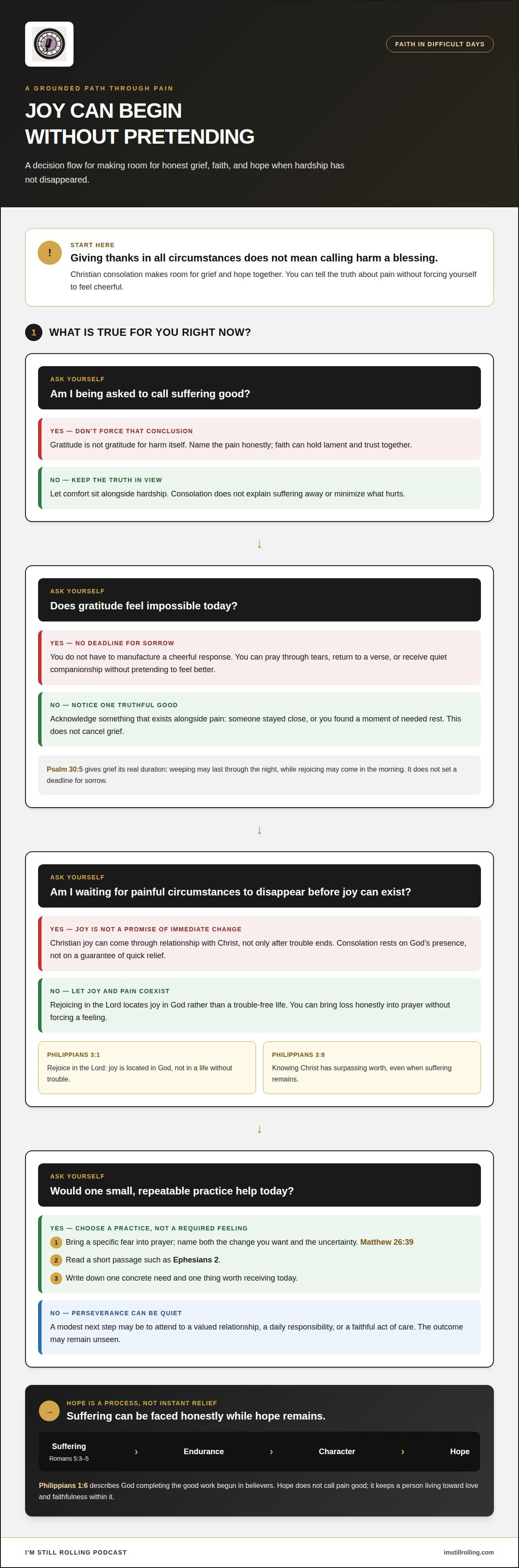
Christian faith doesn’t require denying pain to receive consolation; it offers a way to seek God within it. Philippians 3:8 describes knowing Christ as having surpassing worth, even when suffering remains.
Finding Joy Through God’s Presence
Joy through God’s presence means receiving comfort in relationship with Christ, not waiting for painful circumstances to disappear. Philippians 3:1 calls believers to rejoice in the Lord, locating joy in God rather than in a trouble-free life. That distinction matters when illness, grief, or fear narrows attention to what has been lost. Resting in God’s presence can mean bringing that loss honestly into prayer, without forcing a cheerful response.
Faith and Spirituality Amid Suffering
Faith gives suffering a place within a relationship with God, while spirituality offers practices for staying present to that relationship. First Thessalonians 5:18 calls Christians to give thanks in all circumstances; it doesn’t require gratitude for harm itself. For someone in pain, faith can hold lament and trust together. It can also support perseverance when relief feels distant and no explanation makes the hardship easier.
Aquinas describes joy as resting in a good to the extent that it has been attained, and identifies charity as the cause of the deepest spiritual joy. Since God is the highest good in this account, consolation rests on God’s presence, not on the promise of immediate change. This offers a different measure of joy: not constant happiness, but a bond with God that suffering cannot simply erase.
Psalm 30:5 gives grief its real duration: weeping may last through the night, while rejoicing may come in the morning. The image doesn’t set a deadline for sorrow. Instead, it leaves room for a future beyond the present moment. A person can pray through tears, return to a verse such as Philippians 3:8, or receive a quiet moment of companionship without pretending to feel better.
Gratitude can begin with one truthful acknowledgment: someone stayed close, or you found a moment of needed rest. This small practice doesn’t explain suffering or cancel grief. It turns attention toward a good that exists alongside pain. In this way, Christian consolation joins honest lament with hope, allowing joy to emerge without making suffering seem simple.
A family’s experience of chronic illness and grief
Vaneetha Rendall Risner’s story shows how illness can enter family life early and repeatedly. A book summary describes her undergoing twenty-one surgeries by age thirteen. That detail suggests years in which treatment and recovery interrupted ordinary childhood and family routines. Such experiences can leave parents balancing practical demands with fear, exhaustion, and the wish to protect a child from pain they can’t remove.
Another family faced a different disruption when a son broke his fibula during the second game of his senior-year football season. His recovery lasted seven weeks. A season expected to hold games and shared milestones instead called for patience through injury. That change can hurt even when recovery is underway: grief may attach not only to health, but also to plans, independence, and the future a family imagined.
Loss can reach beyond the household, too. One mother reflected on the ninth death among her daughter’s high school friends through suicide or overdose within six years. Repeated grief can make ordinary days feel fragile as parents try to support a young person carrying sorrow of their own. There’s no neat lesson in such losses. Naming the scale of grief matters because it keeps comfort from becoming pressure to move on quickly.
Sam’s family described the five years after he left college as the hardest they had lived through. His medical team worked toward his goal of attending college for three years. That goal shows how hope can remain specific and practical, even during an arduous period. For families facing chronic illness or grief, a meaningful next step may be modest: protect a valued goal, share the strain, or acknowledge what has changed. None erases pain, but each offers a way to meet the day without pretending it is easy.
Finding joy and hope amid suffering
Practical habits can make room for joy without asking pain to disappear. Prayer, Scripture, and small acts of gratitude can help you stay engaged with faith during difficult days.
Practical Habits for Cultivating Joy
Practical habits are repeatable acts that turn attention toward God and worthwhile goods while suffering continues. Their value lies in giving faith a form for ordinary days, not demanding a particular feeling. Matthew 26:39 offers a model: Jesus asked for another outcome while entrusting himself to God’s will. A person can bring a specific fear into prayer, naming both the desired change and the uncertainty.
Try reading a short passage such as Ephesians 2, which one writer found renewing during a trial. Then write down one concrete need and one thing worth receiving today. The practice doesn’t erase grief or make every day feel joyful. It gives attention a place to rest beyond the immediate crisis, especially when thoughts keep returning to what cannot be controlled.
Finding Hope Amid Suffering
Hope is confidence that suffering doesn’t have the final word, even when circumstances remain painful. Romans 5:3-5 connects suffering with endurance, character, and hope, describing a process rather than instant relief. That matters when recovery is slow or an answer doesn’t come. Hope lets a person recognize hardship honestly while still looking toward what God may bring through faith.
Philippians 1:6 describes God as completing the good work begun in believers. This promise can shape a small, practical choice: keep attending to a valued relationship, a daily responsibility, or a faithful act of care. The outcome may remain unseen. The point is not to call pain good, but to continue living toward love and faithfulness within it.
James 1:1-3 also presents trials as testing that can produce perseverance. Read that passage without turning it into a demand to feel grateful for loss. Ask instead what perseverance looks like today: telling the truth to a trusted person, praying again, or accepting help. These choices keep hope connected to real life, rather than making it a slogan that leaves sorrow unspoken.
What does research say about joy, resilience, and suffering?
Christian writing on suffering offers theological reflection, not a guarantee that pain will quickly resolve. John 16:33 acknowledges tribulation, while Philippians 4:10-13 describes Paul learning contentment in hunger and abundance. Together, these passages distinguish joy from a pleasant mood: faith can shape how a person faces hardship without pretending hardship feels good.
Vaneetha Risner describes joy as able to remain independent of circumstances, while recognizing that it may develop slowly and take effort. This view resists two easy conclusions: that suffering automatically makes someone stronger, or that joy must wait until life improves. A more modest question is: what faithful response is possible today, even if grief or fear remains?
Resilience in this Christian frame is not solitary toughness. Romans 5:3-5 links suffering with endurance, character, and hope, while Psalm 56:8 gives suffering an intimate image: God keeps count of tears. These passages place persistence beside vulnerability. Naming sorrow, accepting support, and continuing a meaningful commitment can all coexist; none requires calling the loss itself good.
John Piper uses 2 Corinthians 4:17-18 to direct attention toward eternal glory without denying present affliction. This perspective can widen the frame when a crisis seems to occupy the whole horizon. It doesn’t make a painful day small; it places that day within a larger account of faith. Hebrews 11:39-40 adds an important limit: faithful people may not receive what was promised during their lifetimes.
For reflection, read one passage slowly, name the hardship it brings to mind, then identify one act of faithfulness that remains possible. This approach treats hope as a way of seeing and responding, not as a prediction about immediate outcomes. To hear lived accounts that explore resilience through adversity, explore stories of resilience.
I'm Still Rolling Podcast
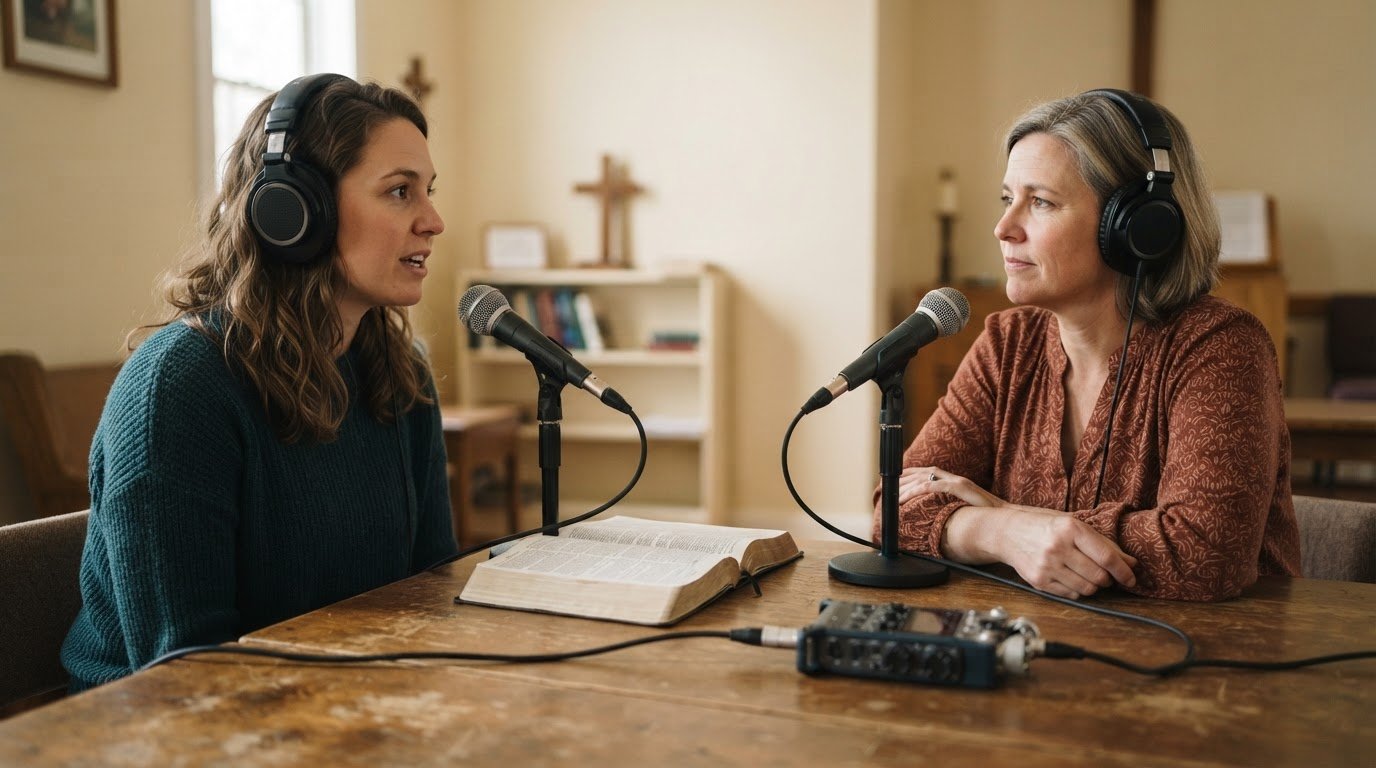
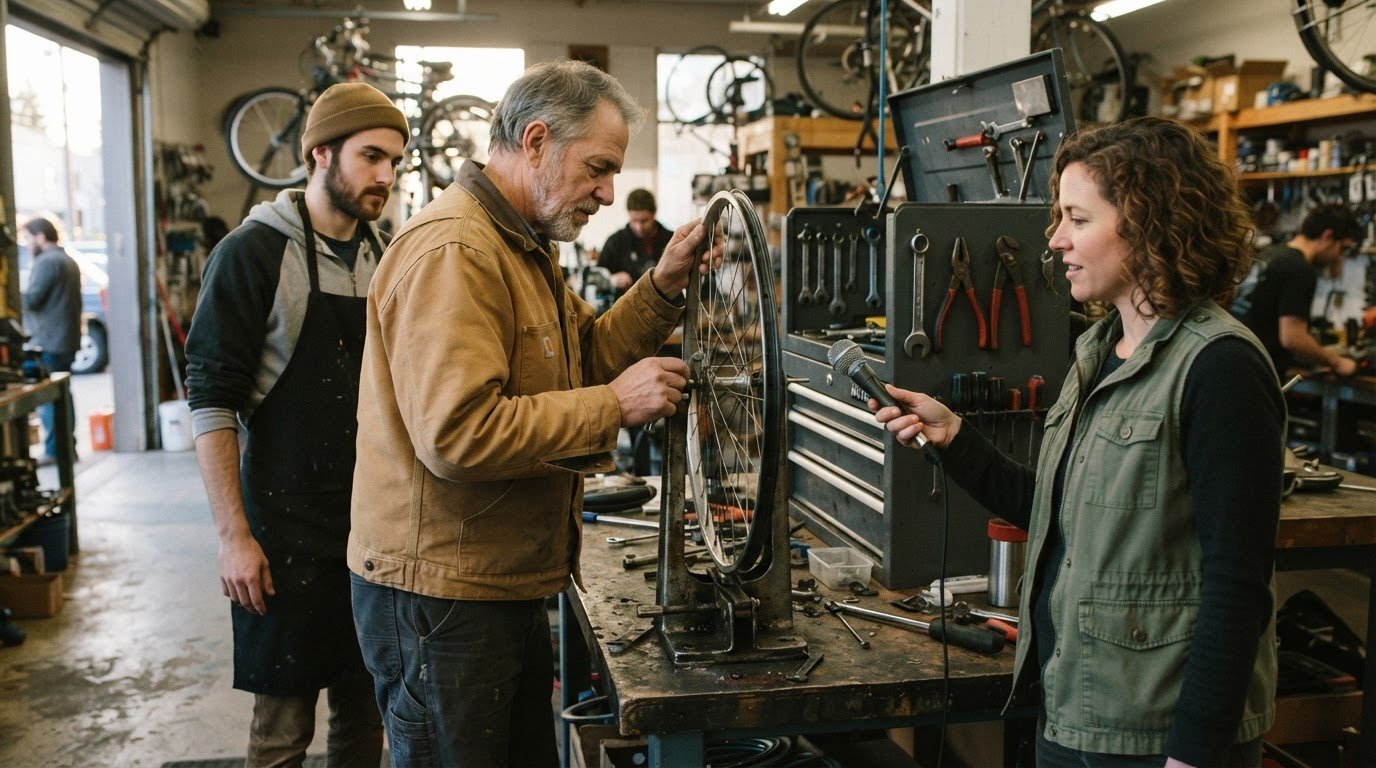
I'm Still Rolling Podcast shares honest conversations about resilience, disability, and life after adversity. For readers seeking human perspectives alongside faith reflection, guests speak from lived experience and hold hardship and hope together without reducing suffering to a simple lesson.
Turn to these conversations when you want to hear how others have faced upheaval, caregiving, loss, or personal change. The newsletter and podcast transcripts offer other ways to engage with these reflections, whether you prefer reading or listening. They share perspectives on resilience, not medical care, legal advocacy, or professional caregiving.
If these stories would help you reflect on suffering and hope, contact I'm Still Rolling Podcast.
Carry hope into the next day
Finding joy amidst suffering isn’t a finish line you reach by thinking positively. It can mean meeting the next day honestly: naming what hurts, staying open to comfort, and choosing one act that reflects what matters to you. Some days, that act may be prayer; on others, it may be accepting company or allowing grief without judging yourself for it. Faith doesn’t ask you to manufacture a feeling or explain every loss. It can give you room to keep seeking meaning while the questions remain.
If you want to hear how people describe living through adversity in their own words, consider making space for a story that meets you where you are. Let it accompany your reflection, not dictate how you should feel. Connect with I'm Still Rolling Podcast and continue exploring the experiences and conversations that speak to your season. Hope may arrive quietly, but even a small step toward it matters.
Frequently Asked Questions
Give thanks in all circumstances?
Yes, Christian teaching calls believers to gratitude in every circumstance, but not to call every circumstance good. Someone grieving a death, for example, needn’t feel thankful for the loss. Gratitude might instead acknowledge a friend who stayed, a kind word, or the strength to ask for support. Honest sorrow and genuine thanks can exist together without either becoming a performance.
What is joy?
Joy is a deep gladness connected to something valued, such as love, faith, or another person’s wellbeing. It isn’t the same as feeling cheerful. Someone who is grieving may miss a person deeply and still feel warmth while sharing a remembered story. That moment doesn’t cancel grief; it shows how sorrow and gladness can exist in the same life.
What is the secret of joy in suffering?
There’s no technique that removes suffering or guarantees a joyful feeling. In Daniel 3:16-18, Shadrach, Meshach, and Abednego remain faithful without making faith depend on being rescued. Their example points to trust that isn’t conditional on a preferred outcome. For someone facing uncertainty, that can mean choosing what remains faithful and loving, even without control over what happens next.
What does finding joy amidst suffering mean?
Finding joy amidst suffering means recognizing moments of goodness or connection without denying what hurts. You don’t have to explain a loss, suppress anger, or act as if pain has passed. For example, someone facing a difficult family season might welcome a quiet conversation while admitting they feel overwhelmed. Joy can accompany hardship without making hardship acceptable.
How can you find joy while going through a difficult time?
Start by making the day smaller: choose one manageable task, identify someone whose presence feels steady, and pause before taking on more. If a difficult appointment is coming up, decide who you’d like to speak with afterward. These choices don’t promise relief. They can protect connection and give the day some shape while larger problems remain unresolved.
How are joy, happiness, and meaning different during hardship?
Happiness often describes a pleasant feeling shaped by what’s happening; joy can describe a deeper gladness that coexists with sorrow. Meaning is different: it concerns what gives a person a reason to care, endure, or act. During hardship, someone might feel unhappy, remain connected to loved ones, and find meaning in keeping a commitment. These experiences can overlap, but none requires denying pain.

Comments