Finding Meaning in Adversity Through Resilience and Connection
Meaning isn’t a reward hardship owes you, and finding meaning in adversity doesn’t require pretending the pain was necessary or good. A crisis can leave questions without quick answers. Still, how you respond to what has happened may gradually reveal what matters, what helps you endure, and where connection is possible.
You may already know that resilience isn’t the same as feeling strong every day. It can mean making room for difficult emotions, adapting when life no longer fits your expectations, and accepting kindness instead of carrying everything alone. This article explores how psychological flexibility, small acts of care, and honest connection can help you make meaning through crisis and trauma, without forcing a neat ending onto an unfinished experience. Reflecting on what you’ve lived through may also help you recognize your values, strengthen relationships, or ease someone else’s loneliness. Meaning can emerge slowly, in ways that feel personal and real.
Table of Contents
Resilience as showing up through difficulty
Resilience means continuing to respond to hardship, even when recovery feels uneven. You might make space for a difficult emotion, then take one manageable step into the day.
Physical, Emotional, and Mental Resilience
Resilience is the capacity to recover physically, emotionally, and mentally after adversity. These dimensions affect one another: caring for your body can support emotional steadiness, while acknowledging grief can free up mental energy for decisions. After a crisis, a daily walk or a few minutes of breath work may be a practical starting point. The aim isn’t to feel strong all the time, but to keep responding to what the moment requires.
Characteristics of Resilience
Resilience draws on habits and support that help you adapt without denying what hurts. Eight themes include core values and purpose, meaning-making, equanimity, self-care, healthy coping, a positive sense of self, social support, and a proactive worldview. You might name a value, such as care, then ask what small action could express it today. These themes aren’t a checklist for perfect recovery; they offer different footholds as circumstances change.
Pressure to Find a Positive Meaning
Searching for meaning can become harmful when it turns into pressure to feel grateful, positive, or stronger before you’re ready. You don’t have to call a painful event a gift or find a lesson on someone else’s schedule. A more respectful approach is to allow anger, sadness, or uncertainty, and let meaning emerge later, if it does. Listening to your emotions without judging them gives you room to respond honestly.
Seek professional help when distress makes daily tasks, sleep, eating, or relationships difficult, or when you feel unsafe. If someone you trust notices persistent irritability, low energy, or hopelessness after a crisis, reaching out to a mental health professional can be a useful next step.
Showing up can also mean adjusting your goal: attend an appointment, ask someone for support, or rest instead of pushing through. These aren’t signs of failure. They’re ways to meet adversity with the resources you have now, while leaving room for a different kind of strength to develop.
Psychological flexibility and experiential avoidance
Psychological flexibility means adjusting your response while making room for difficult thoughts and feelings. Experiential avoidance means trying to escape or suppress them. After an accident, for example, you might avoid every reminder, even when that keeps you from a valued conversation or a necessary appointment.
A study of college students found that distress was associated with greater posttraumatic growth only among those with low experiential avoidance. Students who reported greater distress and little reliance on avoidance also reported the highest levels of growth and meaning in life. This doesn’t mean distress causes growth. It suggests that allowing painful feelings to be present may leave more room to reflect and choose how to respond.
Reappraisal offers a way to consider an experience from another angle. You might ask what you learned, what matters now, or whether the crisis changed how you see a relationship. Comparing your outcome with a worse one you avoided may offer perspective, but it shouldn’t be used to dismiss grief. A positive interpretation is useful only if it feels honest to you.
Yip Pin Xiu was born with Charcot-Marie-Tooth disease, which causes progressive loss of muscle tissue and touch. She represented Singapore and won multiple gold medals at the Paralympics. Her achievements show that disability and meaningful accomplishment can exist together in a person’s life. They don’t make anyone else’s struggle simple or prescribe a single path to strength.
Personal stories can also help you develop a sense of purpose. Try writing down a question about your experience, such as what you wish others understood, then share your thoughts with a trusted friend if that feels right. You could also consider how your experience might help someone feel less alone. Sharing is a choice, not an obligation; privacy can be part of a healthy response, too.
The importance of kindness and connection
Relationships, community, and faith can offer companionship, practical help, and a sense of purpose during hardship. After hurricanes Katrina and Rita, the majority of surveyed families identified faith as their No. 1 asset in surviving the disasters. Faith may anchor some people; others find support through family, friends, or neighbors.
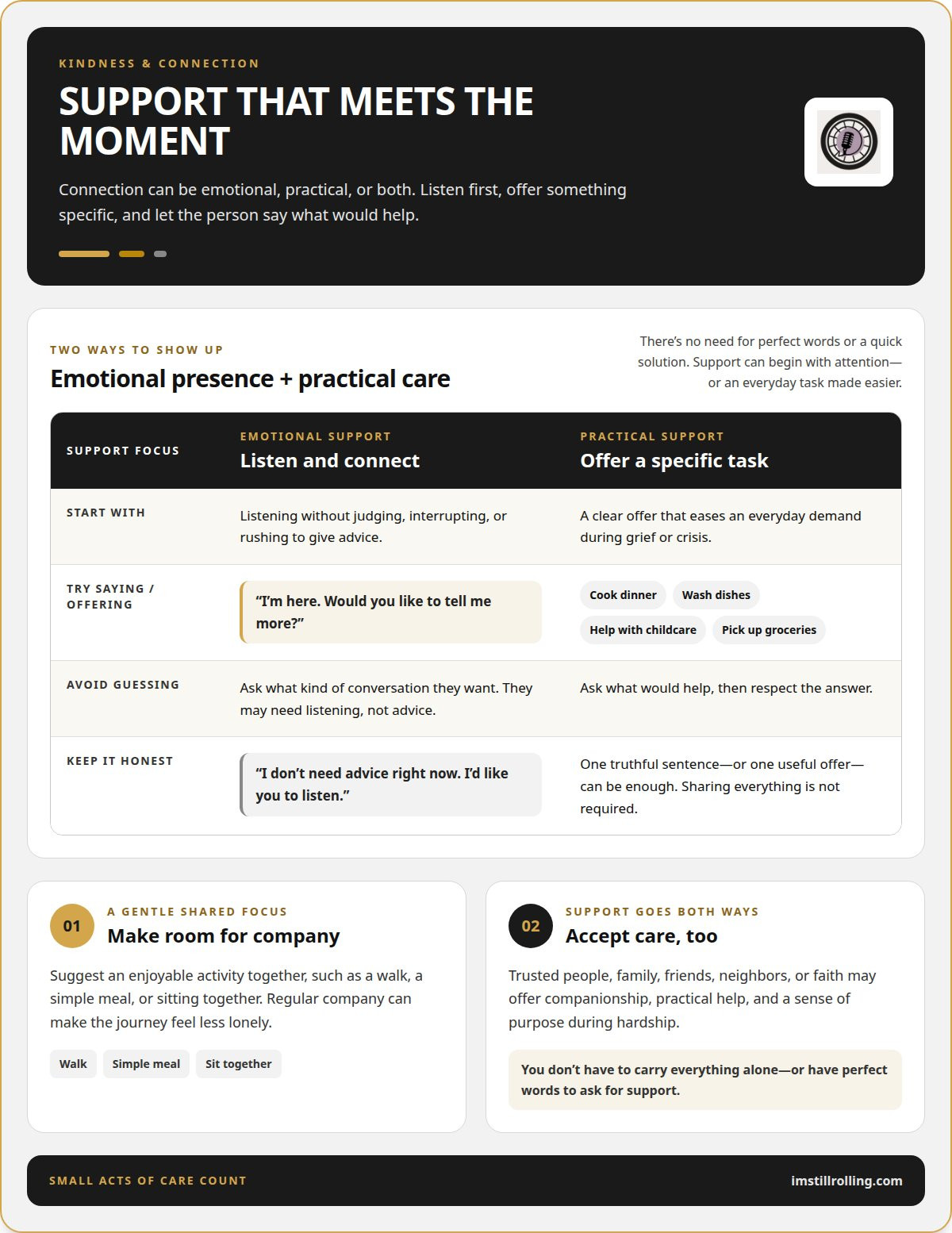
Empathy means imagining another person’s situation so you can connect with their feelings or experiences. In practice, start by listening without judging, interrupting, or rushing to give advice. If a friend describes a recent loss, you might say, “I’m here. Would you like to tell me more?” A willing listener can help someone express pent-up emotions and see the situation more objectively.
Kindness is most useful when it’s specific. Instead of saying, “Let me know if you need anything,” offer to cook dinner, wash dishes, help with childcare, do housework, or pick up groceries. These concrete acts can ease everyday demands when grief or crisis makes them difficult. Ask what would help, then respect the answer.
Connection doesn’t require perfect words or a quick solution. Suggest sharing an enjoyable activity each week, such as a walk, a simple meal, or sitting together. Regular company can make the journey feel less lonely, while the activity gives you both a gentle point of focus beyond the hardship.
Vulnerability can invite deeper connection because honest words give others a chance to understand what you’re carrying. You might tell someone you trust, “I don’t need advice right now. I’d like you to listen.” Naming that need removes the guesswork and lets support fit the moment. You don’t have to be ready to share everything; one truthful sentence can be enough.
Community also grows through small acts of mutual care. You might accept help during a crisis and offer it to someone else later. That exchange preserves dignity: needing support isn’t proof of weakness, and receiving kindness doesn’t erase your ability to contribute. Connection makes room for both.
Finding meaning in challenges and trauma
A crisis can disrupt the beliefs that once made life feel predictable. Making meaning may help you understand what has changed and what matters now.
What Meaning in Adversity Involves
Finding meaning in adversity means making sense of a painful event without needing to call it good. A diagnosis, loss, or accident may challenge your view of yourself or the world, prompting questions about identity, purpose, and what comes next. Meaning can involve revising old beliefs to include what happened, or finding a small action that reflects your values in the present moment. It doesn’t erase difficult feelings.
People may respond in different ways. Assimilation reframes an event so it fits an existing worldview; accommodation changes that worldview to account for the event. Reappraisal might mean noticing that a crisis brought you closer to a loved one, without claiming the crisis was worthwhile.
Meaning After Illness, Grief, or Setbacks
After learning he had cancer, Oliver Sacks wrote about deepening friendships, saying farewell to loved ones, writing more, and seeking understanding. His reflection shows how illness can clarify priorities without making the diagnosis itself positive. Another example is a woman who underwent an eight-hour surgery after being diagnosed with a brain tumor. Her experience illustrates the difficult, personal work of facing a changed future.
In grief, meaning may begin with remembering what a relationship gave you, rather than searching for a reason the loss happened. After a setback, it might mean asking what you want to carry forward. Journaling about an emotionally charged experience for fifteen to twenty minutes a day can help you express positive and negative feelings and explore possible meaning.
Reflection matters, too: intrusive rumination has been linked with declines across areas of growth, while deliberate rumination has been linked with increases in five domains of posttraumatic growth. Pause, name what you’re feeling, then ask yourself: what deserves my attention right now? Meaning may develop gradually, alongside grief, uncertainty, or change. Make room for both pain and possibility without demanding a tidy answer.
I'm Still Rolling Podcast
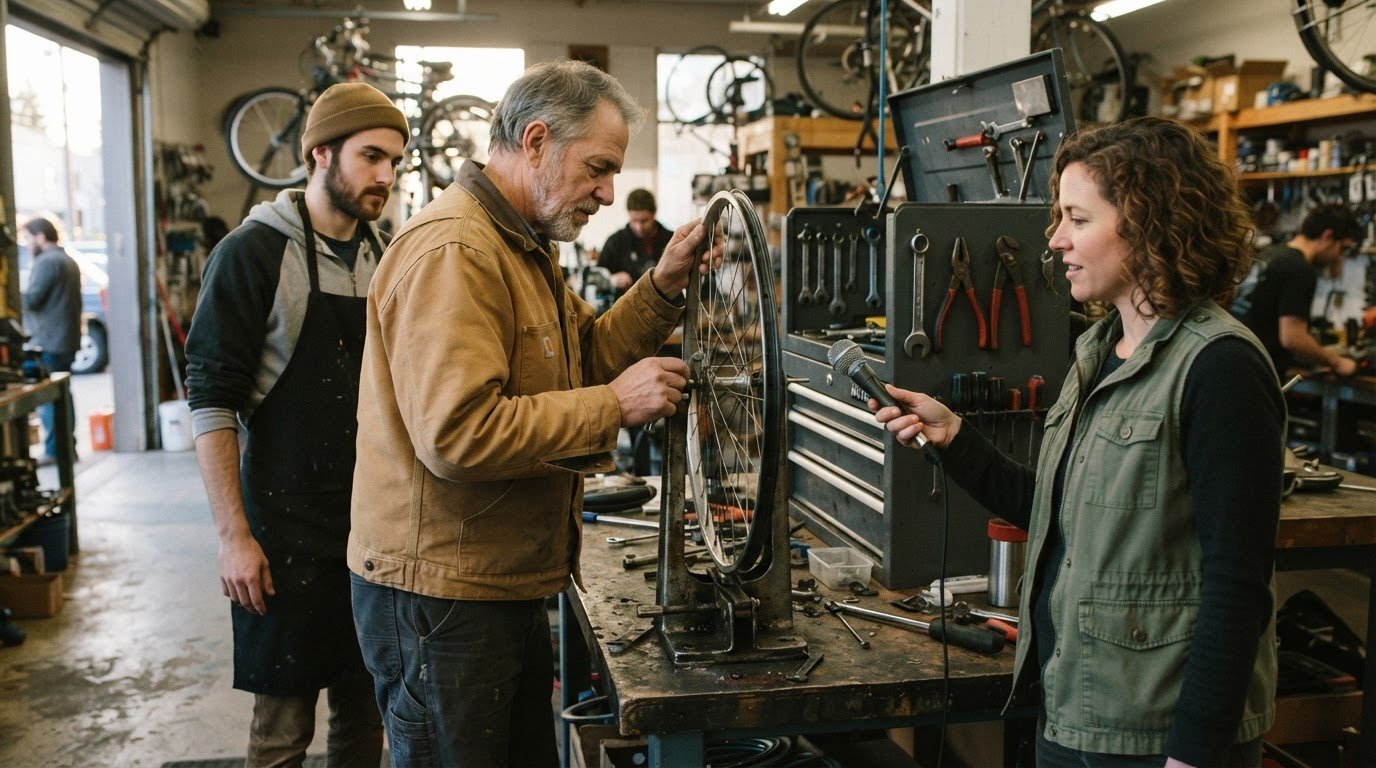
I'm Still Rolling Podcast shares honest conversations about resilience, disability, and life after adversity. Its episodes feature lived experiences that can help you consider how people carry grief, adapt to change, and make meaning without reducing hardship to a simple lesson. Turn to these stories when you want thoughtful perspectives from people who have faced difficult circumstances. Podcast transcripts offer another way to follow the conversations, and the newsletter provides a written connection to the show.
Every story is personal; none has to dictate what your own recovery should look like. If these conversations speak to what you’re facing, contact I'm Still Rolling Podcast.
Let meaning unfold at your own pace
There may be no single moment when hardship suddenly makes sense. The next step can be smaller: notice what feels important today, and let that guide one choice. Meaning can shift as circumstances and feelings change, so you don’t need a final explanation before moving forward.
When finding meaning in adversity, make room for questions without demanding immediate answers. What do you want to protect, remember, or carry into the days ahead? You might write a few words, share them with someone you trust, or return to the question when you’re ready. A modest choice can be enough for now.
Stories of lived experience can offer company as you consider your own path. They don’t provide a script; they remind us that people meet hardship in different ways.
If you’d like to continue exploring these stories, contact I'm Still Rolling Podcast. Keep moving at a pace that respects what you’ve been through and leaves room for what comes next.
Frequently Asked Questions
So how do you make meaning out of crisis?
Start by asking what the crisis has changed, rather than why it had to happen. After losing a job, for example, you might identify what feels uncertain, what remains within your control, and which value you want to protect, such as caring for family or doing useful work. Meaning can take the form of a next choice, not a complete explanation of the crisis.
How can adversity contribute to personal growth and resilience?
Adversity can prompt you to reconsider priorities, recognize capacities you hadn’t relied on before, or invest differently in relationships. After an accident, you might discover that asking for help is part of adapting, not a personal failure. These changes are possible, not automatic. Growth doesn’t cancel loss, and you can continue to struggle while developing new ways to meet daily demands.
What are practical steps to find meaning during difficult times?
Choose one manageable reflection instead of trying to explain everything at once. Write down what feels hardest today, then note one thing you want to preserve, such as a routine, relationship, or personal value. Consider a small action that expresses it. If writing feels burdensome, say the thought aloud to someone you trust. The aim is honest attention, not a polished lesson.
How do psychologists explain meaning-making after trauma or loss?
Psychologists describe meaning-making as efforts to understand an event that conflicts with a person’s beliefs about the world or themselves. Someone who expected life to be predictable may revise that view after a loss, while another person may interpret the event through existing beliefs. These are different ways of making sense of what happened, not proof that it was deserved or beneficial.
What coping strategies help people face adversity without avoiding their emotions?
Try naming the feeling in plain words, such as “I’m frightened about tomorrow,” before deciding what to do next. Set aside a quiet moment to write, talk with someone you trust, or notice what the emotion is asking you to attend to. If a reflection feels overwhelming, pause and return to it when you feel more settled. Facing your feelings doesn’t mean facing everything alone.
How can someone find meaning in adversity when the situation feels unfair or senseless?
You don’t have to find a reason for an unfair event or describe it as positive. Meaning may instead come from deciding what you want to stand for now, such as protecting someone else from similar harm or keeping a loved one’s memory present. If those choices feel out of reach, focus on what would make today more bearable. Your answer can remain unfinished.


Comments