Four ways to explain disability to a child with kindness
A child’s question about disability is an opening, not a problem to shut down. Explaining a disability to a child starts with a simple, honest answer, using respectful words and admitting when you don’t know something. You can also help your child understand that disability is not something to fear, and that barriers in the world can make everyday life harder.
It’s understandable to worry about saying the wrong thing, especially when a question comes unexpectedly or in public. A calm response can show your child that curiosity is welcome and that people deserve respect, not awkward silence or pity. If the question is about someone nearby, answer what you know without guessing about their feelings or experience.
This article offers four practical ways to guide those conversations with kindness. You’ll learn how to respond when you’re unsure, choose clear and respectful language, explain how environments and attitudes can create barriers, and encourage curiosity that can grow into understanding and connection.
Table of Contents
1. What if I don’t know how to answer my child’s question?
For children ages 2-4, a short, kind explanation is usually enough. If your preschooler asks why someone uses a wheelchair, say, “Their legs work differently, and the chair helps them move.” Keep your voice steady and your answer focused on what you know. A simple response makes talking about differences ordinary, not frightening.
When explaining a disability to a child, honesty matters more than having every answer ready. Try, “I’m not sure, but I can learn more.” Avoid inventing a cause or guessing how someone feels. If your child asks why a person speaks differently, acknowledge the difference without making it a joke or a problem.
Silence can leave a child thinking disability is secret or scary. Answer calmly, then invite a follow-up: “What are you wondering about?” For example, if your child asks whether a disability spreads, explain that disability isn’t contagious. Some people are born with disabilities; others acquire them after illness or injury.
Some questions feel difficult because they concern someone nearby. If your child asks what caused a person’s disability, don’t speculate. You can say, “People have different experiences, and I don’t know theirs.” If the person is comfortable answering, ask their permission first. Respect their choice if they’d rather not talk about it.
In public, guide your child’s behavior without shaming them. If they point or stare, gently say, “Let’s not point. You can ask me quietly.” Answer what you can, and speak directly to the person with a disability rather than their companion. If your child wants to help, ask the person before stepping in.
Correct hurtful comments clearly, then suggest better words. For instance, replace “That person is weird” with “They communicate differently.” A calm correction teaches respect without making curiosity feel forbidden. These responses help young children learn that questions are welcome, while people’s privacy and dignity still matter.
2. What words should I use when talking to my child about disability?
Use the word “disability” rather than vague terms like “special needs” or “differently-abled.” For example, say, “Your sister has a disability that affects how she moves.” People may prefer different language for themselves, so use the words a family member chooses. Clear language helps children understand without making disability a secret.
For causes, stick to what the person or family has shared. Some people are born with disabilities; others acquire them after illness or injury. Don’t guess what caused a person’s disability or describe it as a tragedy. If your child asks about a parent, explain what you know in plain words, such as, “Dad’s condition affects his energy, so he sometimes needs to rest.”
Some disabilities aren’t immediately visible. A child might notice that a classmate leaves a noisy room or needs extra time to answer. Explain the specific support without diagnosing: “The quiet room helps Maya feel comfortable.” Avoid saying someone is pretending or assuming how they feel. People with the same disability can move, communicate, or learn differently.
When a parent or sibling has a disability, connect the explanation to everyday family life. Tell your child what may change, what will stay familiar, and that they can ask questions. For instance, “We’ll take the ramp together, and we’ll still read our bedtime story.” This helps your child see the person as more than their disability.
A new diagnosis can bring uncertainty for the whole family. Use the diagnosis name when appropriate, explain what it means today, and invite questions again later. “We’re learning what helps Alex” is more honest than promising everything will stay the same.
Neurodiversity describes the natural differences in how people think, learn, and communicate. A child may need extra time, use a communication device, or prefer predictable routines. Describe the support as part of that person’s way of engaging, not as a flaw to correct. A wheelchair, for example, can support someone’s mobility; it doesn’t define their interests, character, or place in the family.
3. Explaining the social model of disability to children
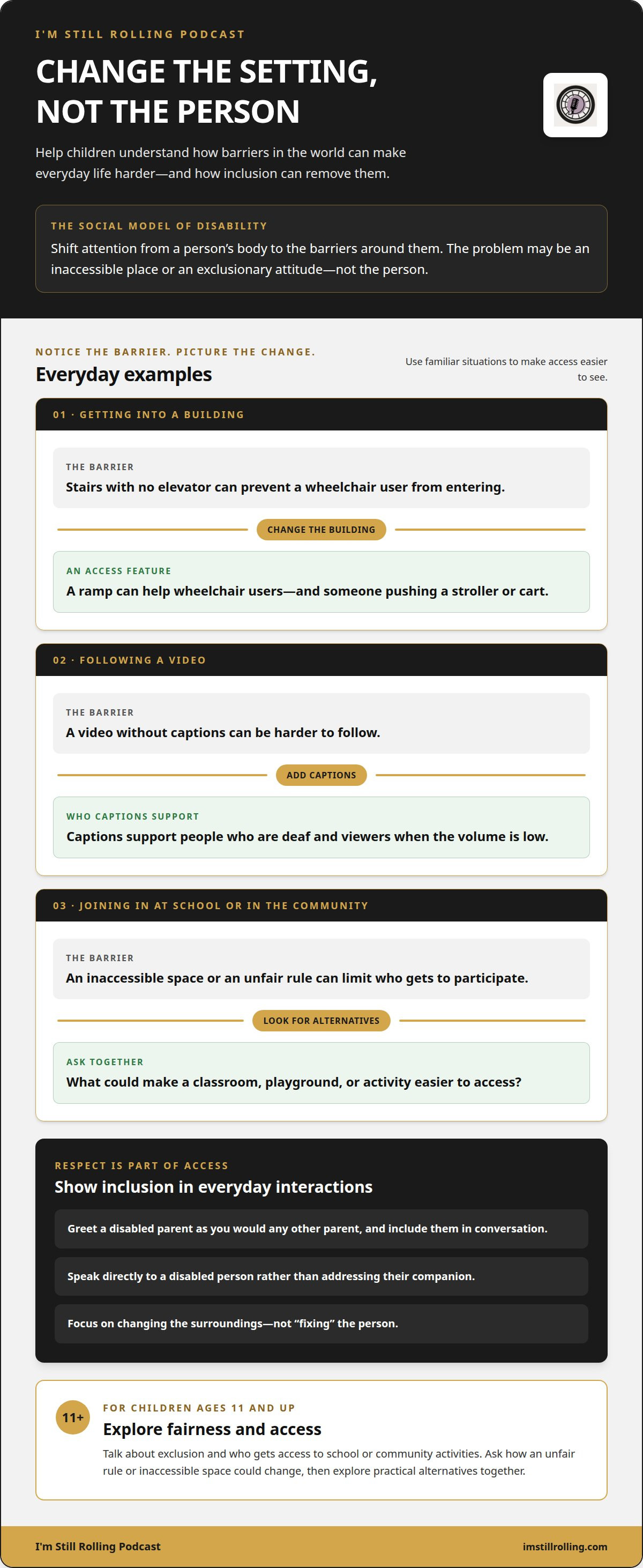
The social model shifts attention from a person’s body to the barriers around them. A wheelchair user may be unable to enter a building with stairs and no elevator. The problem isn’t the wheelchair; it’s the inaccessible entrance. Explain that changing the building can make participation possible.
Use familiar examples to show how inclusive design helps different people. A ramp can help wheelchair users, as well as someone pushing a stroller or cart. Captions support people who are deaf and help viewers when a video’s volume is low. Ask your child what would make a classroom, playground, or video easier to access.
Children also learn from the attitudes adults model. Greet a disabled parent as you would any other parent, and include them in conversation. Speak directly to a disabled person rather than addressing their companion. These small choices demonstrate respect more clearly than a lecture about kindness, and show that disability isn’t a reason to avoid someone.
Books, shows, and inclusive events can make useful conversation starters. Choose a story with a disabled character, then talk about what the character enjoys, contributes, or finds difficult in the setting. An activity can make barriers visible: notice whether stairs block access or missing captions make a video harder to follow. Focus on changing the surroundings, not “fixing” the person.
For children ages 11 and up, discuss fairness, exclusion, and who gets access to school or community activities. Ask how an unfair rule or inaccessible space could change, then explore practical alternatives together. In everyday life, encourage friendships across abilities by finding shared interests, such as music, games, or a favorite book. Inclusion means equal opportunities to take part, not treating everyone identically.
4. Encouraging children’s curiosity about disability
Children can notice differences in physical ability by age three. Curiosity can become learning when adults treat questions as ordinary. If your child asks why a classmate uses a communication device, explain what it helps them do. Then connect through a shared interest, such as a favorite playground game.
For children ages 5-10, welcome questions and build understanding gradually. Try asking, “What are you curious about?” Their answer can reveal whether they’re wondering about communication, friendship, or how an activity works. Respond to that specific interest instead of turning the moment into a long lecture.
Curiosity can also lead to respectful conversations when the situation suits the person. A child might ask someone directly about an aid or how they communicate. Help your child approach politely, allow time for a reply, and accept it if the person doesn’t want to talk. The person’s comfort matters more than satisfying curiosity.
Use a shared activity to help children see one another beyond disability. Invite a classmate to talk about a game, draw together, or share an interest in animals. If conversation takes longer, leave room for pauses instead of finishing someone’s words. This gives both children space to participate themselves.
When a child stares or points, guide them gently rather than scolding. You might say, “You noticed the person’s equipment. Let’s give them space, and we can talk quietly.” This acknowledges what caught their attention while showing them how to act with care. Shame can shut down conversation; calm guidance keeps learning open.
Keep the conversation alive after the moment passes. Ask what your child learned about the person, the activity, or the surroundings, without asking them to report private details. For more perspectives grounded in lived experience, hear conversations about disability and resilience. Those stories can help curiosity grow into recognition of people’s interests, choices, and individuality.
I'm Still Rolling Podcast
I'm Still Rolling Podcast shares honest conversations about disability, resilience, and life after adversity. These lived experiences can help you and your child keep learning beyond a single conversation, with people describing their own lives, relationships, and challenges. Explore podcast episodes together, or use the newsletter and transcripts to revisit stories and ideas at your own pace.
Turn to these stories when your child wants to understand more than a quick explanation can offer. They don't replace your family’s conversations, but they can add perspectives that help children see disabled people as whole individuals. Contact I'm Still Rolling Podcast to continue the conversation or share what you’re hoping to learn.
Let the conversation keep growing
Explaining a disability to a child isn’t about delivering one perfect speech. It’s a relationship built through questions that arise at home, in a classroom, or while sharing a story. Let your child’s understanding develop over time, and make room for them to revisit questions as their perspective changes. Listening closely can show you what they’re ready to understand next.
You don’t need polished words every time. A willingness to pause, learn, and return to a conversation can matter more than an immediate answer. Keep approaching disability with respect, and help your child stay open to knowing people as individuals, with their own experiences and interests.
If you’d like to continue the conversation with I'm Still Rolling Podcast, get in touch. Each thoughtful exchange can help create more understanding, one honest conversation at a time.
Frequently Asked Questions
How can I help my child feel more comfortable around people with disabilities?
Help your child find a natural way to connect without making the other person responsible for teaching them. Before a birthday party, for example, remind your child to greet everyone and let conversation develop around shared activities. If a game needs adapting, ask the group what would make it enjoyable for everyone. Familiar, low-pressure interactions can help comfort grow through genuine friendship.
Isn’t it better not to focus on disability at all?
No. Avoiding disability entirely can leave a child without language for differences they already notice. Instead, mention it when it helps explain access, communication, or someone’s experience, then move on naturally. For example, say that a classmate uses captions to follow a film, then discuss the story together. This recognizes disability without making it the only thing worth noticing about someone.
Should I bring up disability even if my child doesn’t ask about it?
Yes. You can introduce the subject gently without waiting for a question. Before a community event, you might mention that people communicate or move in different ways, then let your child decide whether to ask more. A book or television character can also open the door. Keep the exchange brief if your child seems ready to move on, and return to it another time.
What if I don’t know how to answer my child’s question?
Tell your child what you don’t know, then separate general information from details about a specific person. You could say, “I can explain what captions do, but I don’t know why that person uses them.” If the question concerns someone’s personal experience, don’t treat them as a source on demand. This distinction lets you stay truthful while respecting privacy.
What if my child says something embarrassing or stares at someone with a disability?
Respond briefly and calmly, then address any harm without asking the disabled person to manage the moment. You might say, “That comment wasn’t kind. Let’s use respectful words.” If your child’s words directly hurt someone, offer a simple apology without making a scene or demanding reassurance. Later, talk privately about what happened and practise a more considerate response for next time.
What is normal?
There isn’t one standard way to move, communicate, learn, or take part in daily life. A child who uses a communication device is expressing themselves, even if their words come differently. Avoid treating one disabled person as a model for everyone with the same disability. Focus instead on what that individual enjoys, needs, and chooses, while recognizing that people’s experiences differ.

Comments