How to Get Through Tough Times by Managing Difficult Emotions
Getting through a crisis doesn’t mean pretending you’re fine. Learning how to get through tough times starts with naming what you feel, making room for those emotions without letting them dictate every decision, and choosing one manageable next step. Small, steady actions can help you regain your footing when the bigger picture feels beyond your control.
It’s understandable if that sounds difficult when stress is already taking up so much space. You don’t have to turn hardship into a lesson or summon hope on command. You can begin by noticing what’s happening inside you and responding with care.
This guide offers practical ways to acknowledge and express difficult emotions, keep them from taking over, build supportive routines, and reach for help when the weight feels too heavy to carry alone. Resilience isn’t about being untouched by hardship. It’s about finding ways to keep going through it, one choice at a time.
Table of Contents
1. Acknowledging and expressing difficult emotions
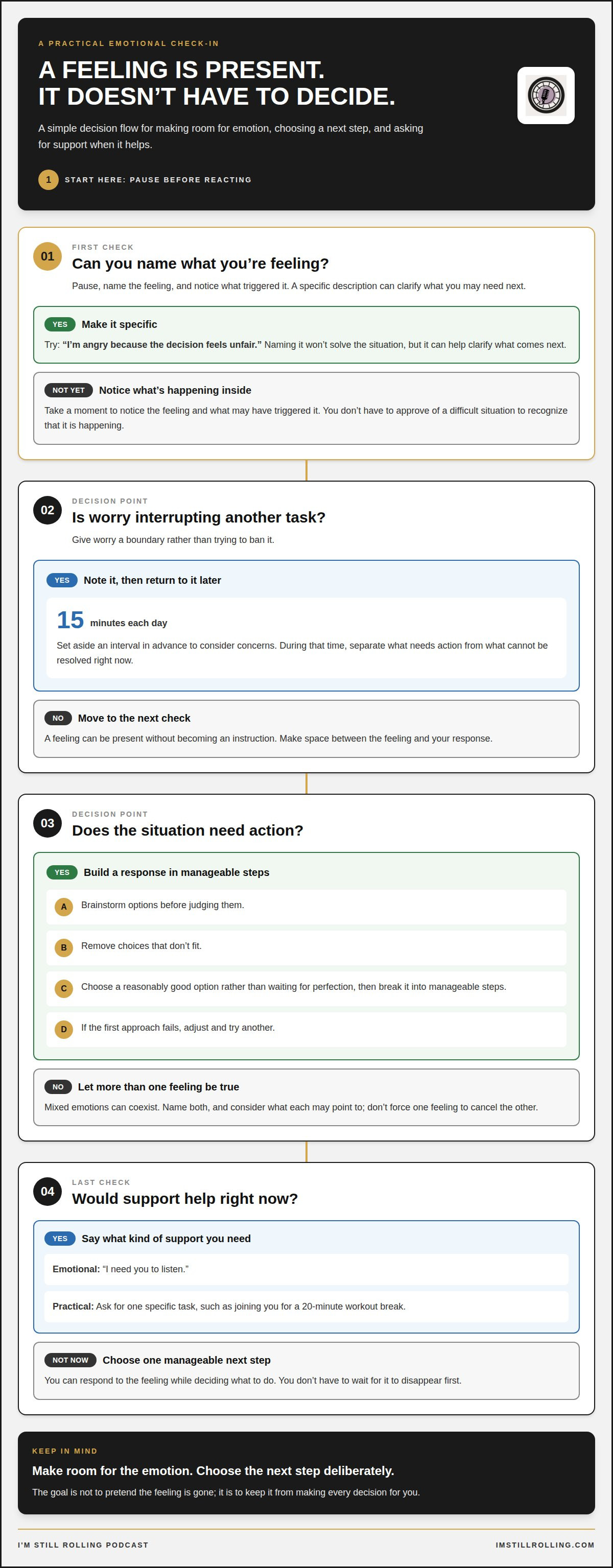
Start with a simple three-step check-in: pause, name the feeling, and notice what triggered it. “I’m angry because the decision feels unfair” is more specific than “I feel bad.” Naming an emotion won’t solve the situation, but it can clarify what you need next.
Accepting a difficult situation means recognizing what’s happening, not approving of it. If a job ends, you can acknowledge the loss while taking practical steps toward your next opportunity. You can also accept that fear or sadness is present without treating either feeling as proof that you can’t cope.
Writing can help put a confusing experience into words. Mental Health America recommends setting aside 15 minutes a day for a few days to write about an upsetting event and its emotional effects. Describe what happened, what you felt, and what remains unresolved. The first attempt may feel painful; give yourself room to stop and return later.
If you share your frustrations with someone, make the conversation purposeful: say whether you want listening, comfort, or help with a next step. One suggested boundary is to keep constructive venting to around 15-30 minutes, then shift to a grounding activity or practical decision. That limit can help expression remain useful rather than becoming the only focus.
Professional support can offer a safer setting for experiences that feel difficult to carry alone. For especially disturbing events, including rape or domestic violence, consider writing about them with a therapist rather than facing the task alone. Reframing doesn’t mean calling the event good. Identify one thing you need now, such as safety, rest, or support, and one small action that could help. A new perspective can start with that next step.
2. Allowing emotions without letting them take over
An emotion can be present without becoming an instruction. When fear rises before a difficult conversation, notice it, then choose whether to prepare, pause, or ask someone to join you. Creating space between feeling and action can help you respond deliberately instead of letting the strongest emotion decide everything.
Mixed emotions can coexist. Leaving a familiar home may bring excitement about a fresh start and grief for what you’re leaving behind. Don’t force one feeling to cancel the other. Name both, then ask what each points to: sadness may signal a meaningful connection, while excitement may reflect a valued possibility. Holding both truths can make the situation feel less contradictory.
Give worry a boundary rather than trying to ban it. Set aside a 15 minute each day interval in advance to consider concerns; when a worry interrupts another task, note it and return to it later. During that interval, separate what needs action from what cannot be resolved right now. This creates a coping structure without requiring you to pretend the concern has disappeared.
Support can be emotional or practical. Tell a friend, “I need you to listen,” or ask for one specific task, such as joining you for a 20-minute workout break. If a problem needs action, brainstorm options before judging them. Later, remove unsuitable choices, pick a reasonably good one rather than waiting for perfection, and break it into manageable steps. If the first approach fails, adjust and try another. These steps help you develop a response while dealing with the feeling, not after it has vanished.
3. Self-care and healthy routines
Practical ways to cope with tough times include protecting sleep, eating regularly, moving your body, and choosing one manageable task. Start with what feels most achievable today, such as preparing a simple meal or stepping outside for five minutes. These actions won’t resolve the crisis, but they can give your day a steadier shape and support your mental health.
Sleep can become unsettled under pressure, so give rest a place in your routine. Adults are advised to prioritize 7-9 hours of quality sleep a night. A consistent wind-down, such as putting away screens and preparing clothes for tomorrow, can mark the shift toward rest. If a full routine feels out of reach, choose one repeatable step and keep it simple.
Movement needn’t begin with an ambitious exercise plan. Try a 10-minute walk or gentle stretching, then notice how your body feels. A short daily meditation or power nap lasting 20 minutes is another self-care option. These practices aren’t a cure for negative feelings or depression; they’re practical ways to make space for recovery during a demanding day.
Build a flexible routine around the time and energy you have. Choose a self-care activity lasting 5, 10, 30, or 60 minutes, such as making tea, calling a friend, or taking a quiet walk. In the morning and at night, name three things you appreciate; they can be as ordinary as a warm meal or a kind message. If eating becomes difficult, make the next step specific, such as setting out an easy snack. Small, repeated choices can help create a positive rhythm without requiring you to feel positive all the time.
4. Resilience during crises
Learning how to get through tough times begins with facing the crisis as it is, not as you wish it were. Hope doesn’t require certainty that everything will work out. It can mean choosing a realistic goal for today, such as completing one necessary task or making space for a conversation you’ve been avoiding. Keep the goal small enough for the time and energy you actually have.
When working out how to get through tough times, separate urgent needs from questions that can wait. A sudden change at work, for example, may bring immediate paperwork and longer-term worries about identity or purpose. Handle the practical deadline first, then give the bigger questions their own attention. That order can protect your focus without pretending the deeper uncertainty has disappeared.
Crises can narrow your attention until every problem feels equally urgent. Write each concern on a separate line, then mark what needs action today. If a task depends on someone else, send a clear request instead of silently carrying the uncertainty. If you can’t act yet, note what information or event would make the next decision clearer.
Resilience also means adapting when circumstances change. A plan that worked last week may no longer fit a new health, family, or work demand. Review your expectations, identify what can be postponed, and tell anyone affected by the change. An honest conversation can help protect the relationship while making room for a more realistic approach.
Meaning can be modest: keeping a promise to a loved one, preserving a creative practice, or showing up for a community. These commitments don’t erase hardship, but they can remind you what matters while you respond to it. For candid perspectives on adversity, hear firsthand stories of resilience.
I'm Still Rolling Podcast
I'm Still Rolling Podcast offers honest conversations about resilience, disability, and life after difficult experiences. When practical steps feel hard to sustain, hearing people describe how they have faced change can offer perspective without suggesting every story has an easy resolution. Explore I'm Still Rolling Podcast episodes, the I'm Still Rolling Newsletter, or Podcast Transcripts in the format that suits you.
These stories can accompany reflection, but they aren't a substitute for professional support when you need it. If you'd like to reach out, contact I'm Still Rolling Podcast.
Choose the next step you can live with
Learning how to get through tough times isn’t about finding a perfect response or transforming pain into a lesson. It can mean staying present with what’s true, then choosing what deserves your attention next. Some days, that choice will be practical. On others, it may mean pausing before you decide.
You don’t need to solve the whole future at once. Let the next step be honest and small enough to take: acknowledge what has changed, make room for what you feel, or let another person’s story meet you where you are. Progress may be quiet and may not follow a straight line. That doesn’t make it meaningless.
If you’d like to continue the conversation, send a message to I'm Still Rolling Podcast. Keep moving at a pace that respects the difficulty of this moment and the possibility of what comes next.
Frequently Asked Questions
How Can I Become More Resilient?
Resilience develops through repeated responses to difficulty, not by never feeling shaken. Choose one challenge you can influence, identify a skill or relationship that could support you, and review what helped after you act. For example, after a tense meeting, note what you handled well and what you might approach differently next time. Reflection can turn experience into a resource for future setbacks.
How can I build resilience during difficult periods?
Stay connected to ordinary responsibilities and people who matter, even when circumstances change. If illness disrupts your usual schedule, choose one flexible anchor, such as a brief call with a family member or preparing tomorrow’s essentials. Adapt plans as your capacity shifts. A workable rhythm is more useful than expecting the same performance from yourself every day.
What daily habits help improve mental health during stress?
Choose habits that reduce friction instead of adding another standard to meet. Place a glass of water beside your workspace, prepare a simple breakfast the night before, or step away from distressing news during meals. Pair a new habit with something you already do, such as stretching after brushing your teeth. If a routine becomes burdensome, simplify it rather than abandoning care altogether.
How can I manage anxiety and overwhelming emotions?
When anxiety spikes, orient yourself to your immediate surroundings before deciding what to do. Name what you can see, feel your feet against the floor, and describe the next task in plain language. Postpone non-urgent choices until the intensity eases. If a setting or conversation repeatedly triggers distress, note the pattern and consider what support or boundary could make it more manageable.
When should I seek professional help for emotional distress?
Consider professional help when distress persists, intensifies, or makes everyday responsibilities and relationships difficult to manage. A therapist or other qualified mental health professional can help you explore what’s happening and discuss suitable support. If you feel at immediate risk of harming yourself or someone else, seek urgent help through local emergency services or a crisis service in your area.
What low-cost mental health resources are available in the United States?
Possible starting points include community mental health clinics, health centers with behavioral health services, university training clinics, and support groups. Some providers may offer fees adjusted to income, but availability and eligibility vary by location. You can also ask your workplace benefits office whether an employee assistance program includes mental health support. To start, search by your city or county and the type of help you need.



Comments