Navigating Work With a Disability Through Accommodation and Access
Navigating work with a disability often calls for practical adjustments rather than one universal solution. Employers can make meetings more accessible, communicate directly with disabled colleagues, and adapt schedules or duties as needs change. Returning to work may also take time, with routines adjusted as a person finds what works.
Everyday decisions shape access: where a meeting takes place, how people communicate, and whether work can flex around appointments or changing capacity. The process can feel personal and complicated, but clear, respectful conversations can turn needs into workable steps.
This article covers practical ways to approach workplace accommodations, choose accessible meeting locations, and adapt when returning to work. It also explains how needs may shift over time, so adjustments can support participation without assuming one solution fits everyone.
Table of Contents
1. Employer practices for accommodating workers
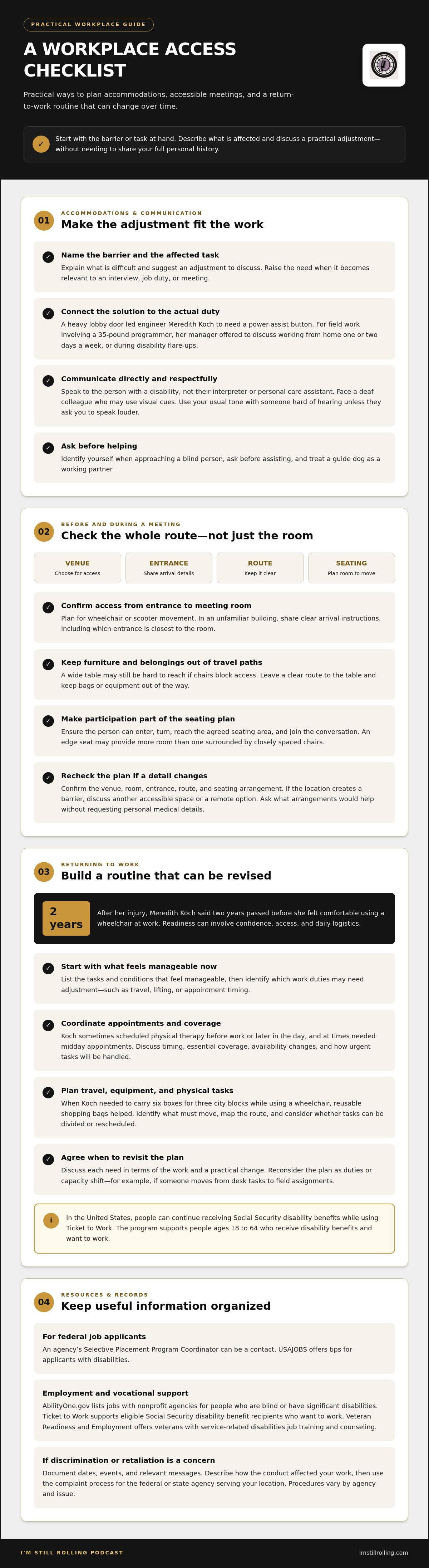
For many people, navigating work with a disability starts with identifying a workplace barrier. Explain which task is affected and suggest an adjustment that could help. You can raise a need when it becomes relevant to an interview, job duty, or meeting. You don’t need to share your full personal history to begin the conversation. For example, explain that a doorway is difficult to open and ask to discuss an access adjustment.
Practical accommodations should fit actual duties. Meredith Koch needed a power-assist button to open a heavy lobby door for her engineering job. She also described a 35-pound programmer she needed to move in field work. Her manager offered to discuss working from home one or two days a week, or during disability flare-ups. These examples show how a specific barrier can guide a useful discussion.
Communication matters, too. Speak directly to a person with a disability, not their interpreter or personal care assistant. Face a deaf colleague who may rely on visual cues. Use your usual tone with someone who is hard of hearing, unless they ask you to speak louder. Ask before assisting. Identify yourself when approaching a blind person, and treat a guide dog as a working partner.
For federal jobs, applicants can contact an agency’s Selective Placement Program Coordinator. USAJOBS offers tips for applicants with disabilities, and AbilityOne.gov lists jobs with nonprofit agencies for people who are blind or have significant disabilities. Ticket to Work supports people ages 18 to 64 who receive Social Security disability benefits and want to work. Veteran Readiness and Employment offers veterans with service-related disabilities job training and counseling.
If you’re concerned about discrimination or retaliation, document dates, events, and relevant messages. Then use the complaint process for the federal or state agency serving your location. Procedures vary by agency and issue. A practical approach to navigating work with a disability includes keeping a clear record and describing how the conduct affected your work.
2. Accessible meeting locations
Before scheduling a meeting, choose a location with enough space for wheelchair or scooter movement. Check the route from the entrance to the meeting room, not just the room itself. A wide table can still create a barrier if chairs block access. Someone using a mobility device should be able to enter, turn, and reach the agreed seating area. Plan for access when choosing the venue, rather than addressing it only on arrival.
Work through the plan in practical terms. Identify the entrance participants will use, where the room is, and the route between them. If the meeting is in an unfamiliar building, share clear arrival instructions beforehand. For example, explain which entrance is closest to the meeting room. Don’t assume the main entrance or a familiar route works for every attendee. Ask about access needs while arranging the meeting, then use the answer to plan the location and setup.
In the room, consider how furniture affects movement and participation. Leave a clear route to the table and keep bags or equipment out of travel paths. A seat at the edge of a group may offer more room than one surrounded by closely spaced chairs. Make sure the person can join the conversation without being separated from colleagues. Small choices like these affect whether someone can focus on the discussion or has to manage obstacles throughout the meeting.
Build a simple access check into meeting preparation. Confirm the venue, room, entrance, and seating arrangement. If one detail changes, check the route again. For a workplace meeting, consider whether another room would make movement easier. If the planned location creates a barrier, discuss an accessible space or a remote option with participants. The goal is practical inclusion, not singling anyone out. A considerate invitation can ask what arrangements would help without requesting personal medical details. Clear planning lets everyone focus more fully on the work.
3. Adapting when returning to work
Returning to work may mean rebuilding routines rather than simply resuming them. Meredith Koch said two years passed after her injury before she felt comfortable using a wheelchair at work. Readiness can involve confidence, access, and daily logistics. If you’re navigating work with a disability, start planning by listing the tasks and conditions that feel manageable now.
Appointments can shape a workable schedule. Koch sometimes scheduled physical therapy before work or later in the day. At times, she needed appointments during midday. Discuss timing with a manager and identify essential coverage needs. A clear plan can note changes in availability and how urgent tasks will be handled, making treatment and work responsibilities easier to coordinate.
Daily travel and equipment may require fresh problem-solving. Koch once needed to carry six boxes for three city blocks while using a wheelchair. Reusable shopping bags helped her transport them. Use this as a planning prompt: identify what needs to move, map the route, and consider whether tasks can be divided or rescheduled. Field work may call for different adjustments than desk-based work.
Social Security disability benefits and work can overlap through the Ticket to Work program. In the United States, people can continue receiving disability benefits while using this program. Returning to work doesn’t have to be an all-or-nothing choice. Keep a record of work changes and benefit communications as plans evolve.
Before returning, note which tasks may need adjustment, such as travel, lifting, or appointment timing. Discuss each need in terms of the work involved and a practical change. Agree on when to revisit the plan if duties or capacity shift. For example, someone starting with desk tasks may later need to reconsider field assignments. Navigating work with a disability can mean revising routines as circumstances change. A specific plan gives the worker and manager a shared starting point.
4. What protections do disabled workers have against discrimination, harassment, or retaliation?
Workplace concerns may involve unequal treatment, repeated hostile conduct, or consequences after someone raises an issue. The details matter. A denied schedule adjustment, mocking comments about a disability, or exclusion from a work meeting may warrant careful attention. Describe what happened without assuming that one event automatically proves unlawful conduct.
Start a private, factual record. Note the date, location, people involved, exact words or actions, and impact on work. Save relevant emails, messages, meeting invitations, and accommodation requests. For example, if a supervisor changes your assigned duties after you raise a concern, record the previous duties, the new duties, and when each change occurred. Keep notes secure, and separate observed events from personal interpretations.
Use the workplace reporting process if it feels safe and appropriate. Explain what happened, when it occurred, and what response you’re seeking. A written report can help you describe the concern precisely. Keep a copy of what you submit and note any response or follow-up conversation. If the problem continues, update your record instead of relying on memory.
Consider the pattern as well as each incident. A single remark, repeated comments, a missed accommodation discussion, or sudden exclusion may call for different follow-up. Identify witnesses, related documents, and any change in work conditions. If a manager is involved, consider a reporting route that doesn’t depend on that manager. Federal and state agencies may handle workplace complaints; the relevant office and process depend on the issue and location.
These steps help organize the facts, but they don’t decide whether conduct violates a law or workplace policy. For legal guidance, seek qualified advice suited to the situation. To hear lived perspectives on disability rights and work, listen to disability-rights stories. Personal accounts can offer context, while records and formal reporting help bring a specific workplace concern into focus.
I'm Still Rolling Podcast: I'm Still Rolling Podcast Episodes
I'm Still Rolling Podcast brings lived experience into conversations about disability, resilience, and life after adversity. Alongside considering workplace adjustments and access, these stories offer a human perspective on how people navigate change, communicate their needs, and find ways forward.
Turn to the episodes for thoughtful conversations alongside practical information, rather than legal or rehabilitation guidance. The I'm Still Rolling Newsletter offers another way to follow these stories, while Podcast Transcripts let you read episode conversations at your own pace.
Personal experiences can’t replace workplace processes or individual advice, but they can help people feel less alone as they reflect on work and disability. Visit imstillrolling.com to explore the episodes, newsletter, and transcripts.
Choose one next step that feels possible
Progress can start with a conversation, a written request, or a clearer sense of what makes work manageable. As you continue navigating work with a disability, take time to identify what matters most now. Needs can change, and a useful plan can change with them.
Before your next workplace discussion, write down one barrier you want addressed and one adjustment that could help. Focus on the work and the practical change, while keeping personal details private if you prefer. A small, specific step can make a complicated situation easier to approach.
When you want to share a question or connect with the show, contact I'm Still Rolling Podcast. Your path at work belongs to you, and each thoughtful step can help make it more accessible.
Frequently Asked Questions
What workplace accommodations can employees with disabilities request under the ADA?
Possible requests include changes to equipment, work methods, schedules, or the work environment. For example, an employee might ask for speech-to-text tools, written instructions after verbal briefings, or adjusted lighting. Describe the task affected and the change that could help. Whether a particular request applies under the ADA depends on the circumstances and the job’s essential duties.
How do you request a reasonable accommodation at work, and what documentation may be needed?
Make a clear request to a manager or the workplace contact who handles accommodation discussions. Explain the barrier, the task it affects, and the practical adjustment you’re seeking. Keep a copy of the request and related messages. If documentation is requested, focus on information about the work-related limitation and requested support, rather than unrelated personal details.
What are the ADA rules for employers and employees with disabilities in the United States?
The ADA is the federal law named in this question, but workplace situations depend on the particular job, request, and circumstances. Employees can describe disability-related barriers and discuss possible adjustments; employers can consider how a proposed change relates to the work. For a specific workplace concern, record what happened and use the appropriate complaint process in your location.
Can an employer deny a workplace accommodation, and what counts as undue hardship?
An employer may reject a proposed adjustment. A practical next step is to ask for the work-related reason and discuss alternatives. For example, if a requested tool can’t support a specific task, another tool or a changed workflow may address the barrier. Undue hardship is a legal standard; assess a specific denial in context rather than treating every refusal as proof of a violation.
How can employees address accessibility barriers, disability-related leave, or remote-work needs?
Describe the barrier and its effect on a specific work task, then ask to discuss workable options. For leave or remote-work needs, identify the affected schedule or duties and suggest how essential tasks could be handled. Keep written records of requests and responses. If access remains unresolved, use the workplace reporting channel or the relevant complaint process for your location.



Comments