Ways to Ask for Support and Share Needs as a Couple
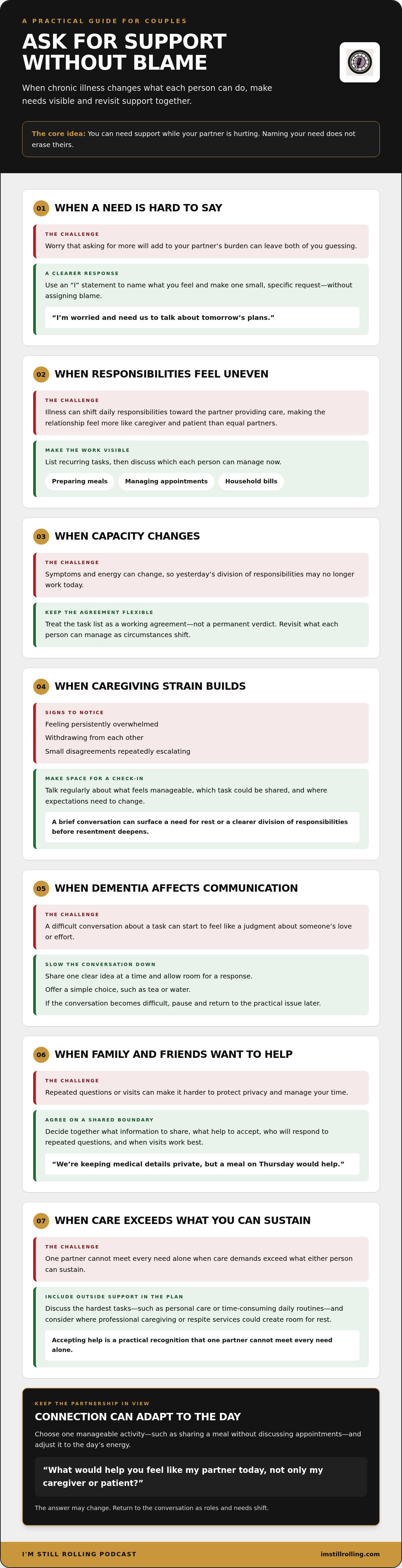
You can ask for support even when your partner is hurting. For couples navigating chronic illness together, caring for one another shouldn’t mean either person has to hide their needs. Use “I” statements to explain what you’re feeling and what would help, without assigning blame. Keep the request small and specific, such as sharing a task, talking through a worry, or adjusting plans for a difficult day.
It’s understandable to worry that asking for more might add to your partner’s burden, especially when illness has changed what each of you can do. Naming that concern, though, gives you a chance to respond to each other clearly instead of relying on guesses. This article explores how to talk about changing needs and roles, approach illness as a shared challenge, and find couples therapy that understands chronic illness. You’ll also find practical ways to plan for harder days, stay connected beyond caregiving, and revisit what support looks like as circumstances shift.
Table of Contents
1. Is It Okay to Ask For More, Even When My Partner is Hurting?
Yes. You can need support while your partner is hurting, and naming that need doesn’t erase their pain. Chronic illness can disrupt both partners’ lives, shifting decisions and daily responsibilities toward the person providing care. That change can affect the relationship, making it feel more like caregiver and patient than equal partners. Start with one specific “I” statement: “I’m worried and need us to talk about tomorrow’s plans.” It shares your experience without blaming your partner.
Make caregiving responsibilities visible before deciding who should do more. List recurring tasks, such as preparing meals, managing appointments, or handling household bills, then discuss which each person can manage now. Capacity can change with symptoms, so treat the list as a working agreement, not a permanent verdict. For couples navigating chronic illness together, compassion means recognizing both the care given and the limits each person faces.
When dementia affects a partner, communication may need a different pace. Try sharing one clear idea at a time, allowing room for a response, and offering a simple choice, such as tea or water. If a conversation becomes difficult, pause and return to the practical issue later. These steps can help keep a disagreement about a task from becoming a judgment about either person’s love or effort.
Watch for signs that caregiving strain is spilling into daily life: feeling persistently overwhelmed, withdrawing from each other, or finding that small disagreements keep escalating. Prevent that buildup with a regular check-in about what feels manageable, which task could be shared, and where expectations need to change. A brief conversation can reveal a need for rest or a clearer division of responsibilities before resentment deepens.
Set boundaries with family and friends by agreeing on what information you’ll share and what help you’ll accept. For example, you might say, “We’re keeping medical details private, but a meal on Thursday would help.” Decide together who will respond to repeated questions and when visits work best. A shared response protects your privacy while giving loved ones a clear way to offer useful support.
If care needs exceed what either partner can sustain, professional caregiving or respite services may be part of the support plan. Discuss the tasks that feel hardest, such as personal care or time-consuming daily routines, and identify where outside help could create room for rest. Accepting help is not a measure of commitment. It’s a practical recognition that one partner cannot meet every need alone.
Protect your partnership alongside the care routine. Choose one manageable activity, such as sharing a meal without discussing appointments, and adapt it to the day’s energy. Ask, “What would help you feel like my partner today, not only my caregiver or patient?” The answer may change, so return to it as roles shift. Asking for support helps make those changes visible, together.
2. Finding couples therapy with chronic illness literacy
A therapist who understands chronic illness can help couples discuss symptoms, capacity, and emotional strain without treating illness as a relationship failure. In an initial conversation, describe the condition’s practical effects: unpredictable energy, changing plans, pain, or appointments that shape daily life. Notice whether the therapist asks how those realities affect both partners, rather than focusing only on the person with the diagnosis. This helps you see whether therapy can address the illness and the relationship together.
Ask how the therapist approaches recurring conflict and emotional disconnection. Emotionally Focused Therapy, or EFT, focuses on emotional patterns partners can fall into when they feel alone, criticized, or unable to reach each other. It can help couples express the vulnerable feelings beneath an argument about missed plans or household tasks. The aim is not to make either partner responsible for the illness, but to understand how each responds when fear or overwhelm takes hold.
Secure attachment can be a useful lens for discussing what helps each partner feel heard and supported. One person might ask for reassurance before a medical appointment, while the other needs a clear request instead of guessing. A therapist can help translate those different needs into direct conversations. Look for someone who makes room for both partners’ experiences and doesn’t compare their contributions as if care could be measured on a single scale.
Practical access matters, too. Virtual therapy can let couples attend from home without travelling, which may help when fatigue, mobility limits, or treatment schedules complicate an in-person session. Before starting, discuss whether sessions can accommodate changing energy and whether both partners can participate privately. If one person has a difficult day, agree on a simple way to communicate that and decide whether to attend or reschedule.
Couples can plan finances and medical expenses by reviewing recurring costs, upcoming appointments, and household bills together. Decide who will track expenses, what information both partners need, and when to revisit the plan as care needs change.
In therapy, bring a specific situation rather than a broad verdict about the relationship. Describe what happened, what each person felt, and what would have helped. A therapist might guide a conversation about a cancelled outing, then help you plan how to adapt shared time when symptoms change. This work can protect a loving foundation without demanding that either partner feel hopeful on command.
For couples navigating chronic illness together, therapy is a place to practice new ways of listening and responding, not a test of who is coping best. A useful session leaves room for grief, frustration, and care while helping both partners identify one realistic next step.
3. What is Dyadic Coping, Actually?
Dyadic coping means responding to stress as a team, rather than treating illness as one person’s problem. It can include checking in, sharing emotional space, and adapting responsibilities together. After a difficult appointment, for example, one partner might ask, “Do you want to talk, rest, or have help with dinner?” That question makes support specific and gives the other person room to answer.
Think of illness as the shared challenge, not the opponent between you. This doesn’t mean both partners experience the same symptoms or carry identical tasks. It means making a plan that recognizes each person’s capacity. Agree on a short check-in about what feels manageable, what feels heavy, and what needs to change. Naming the challenge can reduce blame and strengthen your shared response to it.
Gottman-informed practices offer useful ways to make conversations more attentive. Try a gentle start-up: describe one concern without accusation, such as, “I’m worried we’ll miss the appointment if I drive after work.” Then make a clear request. A stress-reducing conversation can also start with listening rather than fixing: ask what felt hardest today, reflect what you heard, and check whether your partner wants advice or company.
Household plans work best when they account for variable energy. List recurring tasks, then mark which are essential, which can wait, and which can be handed off. If one partner usually cooks but has a flare, the other might prepare a low-effort meal or arrange leftovers. When both partners have limited capacity, agree that a functional home is enough for now. Shared pacing treats energy as a household resource, not a personal failing.
Make handoffs explicit. Instead of assuming someone will notice an unfinished task, say, “I can handle the laundry today; could you refill the medication organizer?” Then revisit the agreement at your next check-in. This helps prevent mental load from disappearing into one partner’s invisible work. It also gives the caregiver a chance to name limits before exhaustion shapes the conversation.
Shared decisions about treatment and care can start with each partner naming priorities and questions. Write them down before an appointment, discuss what matters most to the person receiving care, and agree who will track next steps. The other partner can offer perspective and support while respecting that person’s preferences.
Illness may change shared activities, but connection doesn’t have to disappear. Adapt a familiar outing into a shorter walk, a quiet meal at home, or a favorite show together. If plans need to change, choose an alternative that still feels like time as partners, not only patient and caregiver. Small, deliberate adjustments can keep your relationship present amid difficult challenges.
4. How chronic illness shifts relationship roles and responsibilities
A chronic condition can last for years or the rest of a person’s life, so relationship roles may change repeatedly. One partner might handle appointments during a period of fatigue, while the other manages household decisions. Later, those responsibilities may shift again. Naming the change matters: “I’m carrying more planning this month” describes the dynamic more clearly than “You never help.” It gives both partners something specific to discuss.
Physical limitations, fatigue, emotional distress, and frustration can affect daily routines and independence. The partner experiencing illness may grieve activities they can no longer do as before. The other may feel worried, lonely, or resentful about taking on additional tasks. These emotions can coexist with love. Recognizing them without turning them into accusations can preserve connection while making room for an honest account of what has changed.
Intimacy may also shift. Chronic illness can reduce emotional closeness or affect sexual intimacy, especially when symptoms, stress, or changing body needs shape a couple’s routines. Rather than treating distance as proof that love has disappeared, describe the specific experience: “I miss having time together without discussing care.” Then explore forms of closeness that fit current energy, such as a quiet conversation, affectionate touch, or shared rest.
Isolation can deepen when illness limits social plans or leaves one partner focused on caregiving. Choose a manageable way to maintain connection outside the household, such as a brief call with a trusted friend or an adapted visit. Couples can also protect time together that isn’t organized around appointments. A familiar ritual, like listening to music after dinner, can offer continuity when other parts of life feel uncertain.
Couples therapy can provide a structured space to express difficult emotions and develop communication and problem-solving skills. Partners might bring a recurring disagreement about appointment planning and identify what each person needs from that conversation. Therapy can help separate the practical issue from deeper fears, such as losing independence or feeling alone. It supports relationship work without requiring either partner to pretend the condition is easy.
Working on relationship skills before a crisis can give couples a foundation to draw on when symptoms change. Practice listening without interrupting, ask what support would help, and decide together how to handle disrupted plans. These habits are useful before a flare or new limitation arrives, not only after conflict has escalated. A calm conversation now can make later adjustments less unfamiliar.
Review your changing roles during a planned check-in. Each partner can name one responsibility they’re carrying, one task they’d like to change, and one source of connection they want to protect. If mental health or emotional distress becomes a concern, say so directly and discuss what support would help. For couples navigating chronic illness together, honest role reviews can keep practical changes from silently becoming permanent assumptions.
5. Talking about chronic illness as a couple
A useful conversation can begin with a small, repeatable question: “What do we each need today?” Ask it during a calm moment, not only after plans fall apart. One partner might need practical help getting to an appointment; the other might need time to name a worry. Regular check-ins make room for both answers and help partners feel heard before assumptions harden into conflict.
Stress can turn silence into avoidance, a short reply into a misunderstanding, or a small disagreement into a larger fight. Slow that pattern by separating facts from interpretations. Try: “The appointment changed, and I’m worried about the schedule,” rather than, “You don’t care about our plans.” Then pause and ask what the other person understood. This keeps the conversation anchored in concerns you can discuss.
Some feelings are difficult to admit. Grief over lost normalcy, anxiety about the future, frustration, guilt, and resentment can all surface. Name one feeling at a time and connect it to a specific experience: “I felt lonely when we cancelled dinner again.” The goal isn’t to erase the feeling or force optimism. It’s to help each partner understand what the illness is changing emotionally.
Learn about the condition together using information that helps explain its effects on daily life. Then notice changes in mood or behavior, including signs of depression, and bring those observations into a direct conversation. Try, “You seem more withdrawn after appointments; how have you been feeling?” This expresses concern without diagnosing or dismissing what the other person says.
When both partners have limited energy, agree in advance on a lower-demand version of ordinary life. Choose an easy meal, postpone nonessential chores, and treat a functional home as sufficient during difficult periods. You don’t need to apologize for adjusting expectations. A shared plan reduces the pressure to renegotiate every task when energy has already run low.
Open communication includes intimacy. If fatigue affects physical closeness, discuss whether another time of day might work better, when energy is higher. Make the conversation about comfort and desire, not obligation. You can also protect your connection through a shared activity that fits current capacity, such as listening to music together or adapting a familiar outing.
Humor can make an absurd moment feel less suffocating, as long as both partners welcome it. It doesn’t solve the illness or replace serious conversations, but a private joke about a disrupted plan can offer a breath of relief. For honest stories about resilience and life after adversity, listen to conversations shaped by lived experience.
I'm Still Rolling Podcast: I'm Still Rolling Podcast Episodes
I'M STILL ROLLING shares honest conversations about resilience, disability, caregiving, and life after adversity. Its episodes can offer perspective when illness has changed a relationship’s routines or sense of possibility, bringing lived experiences to questions couples may be working through. They don’t replace couples therapy or medical guidance; they offer stories that can help listeners feel less alone and reflect on their own conversations.
Choose an episode when you want to hear how others describe difficult transitions, or read the Podcast Transcripts when listening isn’t convenient. The I'm Still Rolling Newsletter offers another way to stay connected to these stories and themes. Explore the episodes and visit I'm Still Rolling Podcast when you’re ready.
Let the Next Conversation Begin Gently
There may not be a perfect moment to talk, and you don’t need a complete plan before beginning. Choose one honest sentence you can say today, or one question that helps you understand what your partner is carrying. For couples navigating chronic illness together, a small opening can make room for the next conversation without demanding that either person solve everything at once.
Stories can also offer a way to reflect when direct conversation feels hard. I'M STILL ROLLING Podcast Episodes, the I'M STILL ROLLING Newsletter, and Podcast Transcripts share perspectives on resilience, disability, caregiving, and life after adversity. They can complement the conversations and support you’re building as a couple.
If you’d like to connect with I'm Still Rolling Podcast, get in touch through the website. Keep taking the next step at a pace that respects both of you. A relationship can keep finding its way forward, one truthful conversation at a time.
Frequently Asked Questions
Is It Okay to Ask For More, Even When My Partner is Hurting?
Yes, asking for support is reasonable, even when your partner is in pain. Choose a moment when neither of you is rushing, and make one request rather than presenting a list of grievances. For example: “I know today is hard. Could you sit with me while I call my sister?” This recognizes your partner’s experience while making your need clear. If they can’t help, discuss another option together.
What is Dyadic Coping, Actually?
Dyadic coping describes how partners respond to stress as a couple, rather than leaving one person to carry it alone. It can be as simple as naming a shared strain, asking what kind of support would help, and agreeing on a next step. After an appointment brings difficult news, for example, one partner may want quiet while the other handles dinner. The approach adapts to both people’s needs.
How can couples communicate about chronic illness and changing needs?
Use specific, timely language to explain what has changed and what you need now. “I can’t manage the grocery trip today, but I can place the order” gives more useful information than “I’m exhausted.” Ask your partner what they understood, then clarify any assumptions. Since capacity can shift, treat yesterday’s agreement as open to revision. A short conversation about today’s limits can prevent plans from resting on guesswork.
How can partners divide caregiving responsibilities fairly?
Fairness means accounting for each partner’s capacity, not splitting every task evenly. List recurring responsibilities, including less visible work such as tracking appointments or remembering supplies. Then discuss which tasks each person can take on and which could be simplified or handed off. One partner might manage appointment notes while the other arranges transportation. Review the arrangement after symptoms or schedules change, rather than letting old roles become assumed.
What are ways couples can maintain intimacy when one partner is chronically ill?
Talk about what closeness means to each of you, since intimacy can include affection, conversation, and sexual connection. If fatigue makes evenings difficult, discuss whether another time feels better, when energy is higher. Agree that either partner can pause or change plans without it becoming a measure of love. A private check-in about comfort, desire, and what feels welcome can help you stay connected while respecting changing needs.
How does chronic illness affect relationship satisfaction and mental health?
Illness can strain emotional closeness and sexual intimacy, while grief, anxiety, frustration, or resentment may complicate daily interactions. Those feelings don’t mean a relationship is failing, but they deserve attention. Notice changes such as withdrawal, persistent low mood, or increasing conflict, and speak openly about what you observe. Couples therapy can help partners express difficult emotions and work on communication. If you’re concerned about depression, name that concern compassionately rather than dismissing it.
What support groups and counseling options are available for couples facing chronic illness?
Couples may consider therapy with a practitioner who understands chronic illness, as well as peer support where people share lived experiences. Therapy can help partners work through conflict, shifting roles, and emotional strain; a peer group may offer the relief of hearing others describe similar challenges. Online sessions can reduce travel demands. Podcasts and written stories can also offer reflection, though they aren’t a substitute for counseling or a support group.
What practical routines help couples manage symptoms, appointments, and daily life?
Use one shared calendar for appointments, medication-related reminders, and household commitments, then agree who updates it. Keep a brief note of questions or changes to discuss at appointments, so details aren’t left to memory on a stressful day. Create a flexible flare-up plan that identifies essential tasks, meals that require little effort, and activities that can wait. Review the routine regularly so it can adapt as symptoms and capacity change.


Comments