Caregiver Burnout Stories: Busting the Myths of the Heroic Sacrifice
The myth of the heroic caregiver isn't just a harmless ideal; it's a structural trap that's currently pushing 90% of family caregivers toward the brink of exhaustion. When we examine caregiver burnout stories, we see a recurring pattern of people who feel a crushing weight of guilt every time they wish for a life that doesn't revolve around medication schedules or physical assistance. It's a lonely, silent struggle that society often masks with hollow platitudes about your "strength." This isolation can make you feel like you're failing, but the truth is much more complex and far less personal than you've been led to believe.
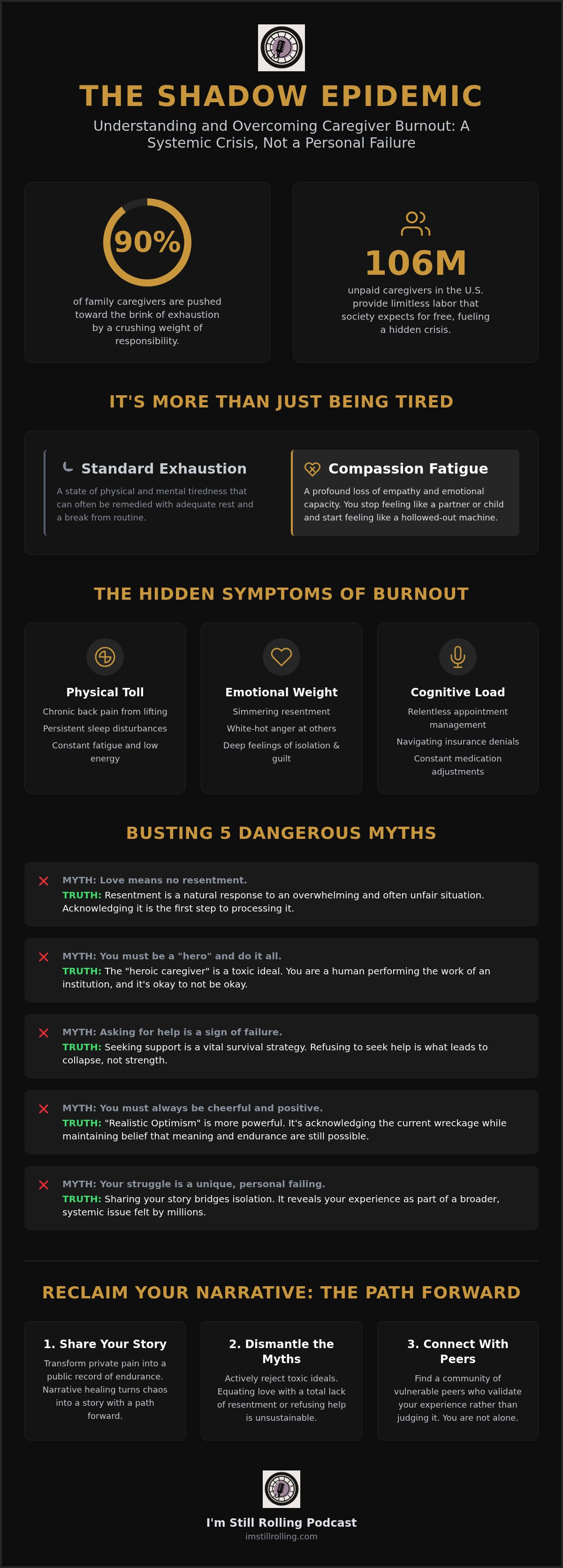
We're pulling back the curtain on the raw, unvarnished reality of long-term care to show you that your struggle is a systemic reality, not a personal failure. You'll discover why your feelings of being completely "done" aren't a sign of a character flaw, but a natural response to a world that expects individuals to perform the work of entire institutions. We'll examine the data behind this 2026 crisis, share lived experiences that mirror your own, and provide practical ways to reframe your journey from a solitary burden into a shared human experience that demands recognition and grace.
Table of Contents
What is Caregiver Burnout? Defining the 'Messy' Reality
Caregiver burnout is more than just a bad week or a lack of sleep. It is a profound, multifaceted state of physical, emotional, and mental exhaustion that hollows out the spirit. While society often sanitizes these experiences into tidy narratives of "heroic sacrifice," the real caregiver burden is far more abrasive. We need to distinguish between simple tiredness, which a long weekend might fix, and compassion fatigue. The latter is a specific, devastating loss of the ability to empathize with the person you love. It’s the point where you stop feeling like a partner or child and start feeling like a hollowed-out machine.
In our work as journalists, we've found that the truth of caregiving is often buried under a "brave face" maintained for the benefit of others. Sharing raw caregiver burnout stories isn't about wallowing; it's about accurate reporting on the human condition. Survival in this space requires what we call "realistic optimism." This isn't the hollow "everything happens for a reason" cheerfulness. Instead, it’s a grounded acknowledgment of the current wreckage while maintaining the belief that endurance and meaning are still possible within it.
The Symptoms You’re Ignoring
The body often speaks before the mind admits the truth. You might notice chronic back pain from the daily "lifting" toll or sleep disturbances that persist even when your loved one is resting. Emotionally, the markers are just as sharp. You may feel a simmering resentment toward the person in your care or a white-hot anger at "MIA" siblings who offer advice but never their time. Then there's the invisible cognitive load: the relentless management of medical appointments, insurance denials, and medication adjustments that never seems to end.
Why We Call it a 'Shadow Epidemic'
As of 2026, there are an estimated 106 million unpaid caregivers in the United States. This staggering number represents a massive amount of "unconditional" and "limitless" labor that society simply expects for free. We call it a shadow epidemic because it happens behind closed doors, away from the public eye. Caregiver burnout is a predictable response to an unsustainable system that asks individuals to do the work of an entire village without the infrastructure to support them.
The Journalistic Truth: Why Caregiver Stories Matter
Storytelling is the antidote to the silence that often suffocates a home centered on care. When we encounter raw, unflinching caregiver burnout stories, we're doing more than consuming content; we're witnessing a shared reality that validates our own. The media often relies on "disability tropes," either the saintly caregiver or the tragic victim, but these caricatures fail to capture the grit of the actual human experience. By listening to the "darkest moments" of others, we find a strange, resilient hope. It’s the realization that if they survived that midnight panic or that wave of resentment, perhaps we can too.
This isn't just about emotional resonance; it's about physical survival. Unchecked Caregiver stress can lead to long-term health issues, making the act of sharing these narratives a form of preventative medicine. By documenting the struggle with journalistic rigor, we transform private pain into a public record of endurance.
Breaking the Silence of the Sickroom
There's a profound psychological relief in finding your internal resilience reflected in someone else's voice. Mike Sugerman and Janice Wright bring decades of journalistic experience to the I'm Still Rolling Podcast, moving beyond the surface to uncover the difficult truths many are afraid to whisper. They understand that there's a vital difference between "venting," which can sometimes leave you stuck in the trauma, and "narrative healing." Narrative healing involves taking the chaotic fragments of a crisis and weaving them into a story that has a beginning, a middle, and a path forward. It’s about finding the steady, reliable pulse of a life that's still worth living, even when the circumstances are heavy. This structured approach to storytelling helps listeners categorize their own experiences, moving from a state of being overwhelmed to one of active observation.
Finding Your Voice in the Chaos
It’s easy to lose your identity when your days are dictated by a diagnosis. You become "the wife of the patient" or "the daughter of the man with dementia," and the "I" slowly disappears. Reclaiming your narrative means asserting that your life still has its own trajectory, even while intertwined with another's. This is especially true when caregiving for spouse with alzheimer's, where the emotional and practical shifts are constant and destabilizing. By engaging with caregiver burnout stories, you start to see yourself as the protagonist of your own life again, rather than just a supporting character in someone else's medical history. Reclaiming this voice isn't just a personal victory; it's a necessary step in maintaining the endurance required for long-term care. If you're looking for a place where these truths are spoken aloud, you can explore our latest podcast episodes for a deeper connection to this community.
Busting the 5 Dangerous Myths of the 'Perfect' Caregiver
The cultural architecture surrounding caregiving is built on a series of "saintly" expectations that are both unrealistic and deeply damaging. When we listen to authentic caregiver burnout stories, we often hear these myths repeated like a script that nobody asked to perform. These falsehoods don't just create pressure; they create a psychological cage that prevents us from acknowledging our own humanity. To find a path forward, we must first dismantle these five pervasive lies:
Myth 1: Love prevents resentment. In reality, love and resentment are often roommates in the same house. Feeling angry doesn't mean you've stopped caring.
Myth 2: Only I can provide the care. This sense of indispensability is often a trauma response. It leads to isolation and prevents the necessary delegation of labor.
Myth 3: Self-care is a luxury. It's maintenance. You wouldn't expect a car to run without fuel, yet we expect caregivers to run on empty for years.
Myth 4: Admitting struggle is betrayal. Silence is the actual wedge in a relationship. Truth is a form of intimacy that allows both parties to exist in reality.
Myth 5: Resilience means never breaking down. Resilience is the bounce back, not the absence of the fall. Breaking down is often the body's necessary release valve.
Deconstructing the 'Saintly' Trope
The "hero" label sounds like a compliment, but it acts like a gag order. If you're a hero, you aren't supposed to need help, and your community may step back, assuming you have everything under control. This is especially abrasive in long-term spinal cord injury (SCI) or dementia care where the "brave face" becomes a permanent mask. Anger is a valid response to a loss of personal freedom. Owning that anger, rather than burying it under performative grace, is the first step toward genuine endurance.
Reframing Guilt as Misplaced Responsibility
There is a vital distinction between caring for a person and attempting to cure a condition that is, by definition, chronic or terminal. Guilt often stems from the mistaken belief that if we just worked harder or loved more, we could "fix" the unfixable. Finding sustainable Tips for taking care of yourself isn't about escaping your life; it's about preserving the person who lives it. To silence the inner critic during a breakdown, you must recognize that your limits aren't a failure of character. They're a biological reality. By deconstructing these myths, we can start to write new, more honest caregiver burnout stories that prioritize the well-being of everyone involved.
From Isolation to Advocacy: Reclaiming Your Narrative
The transition from a state of silent suffering to active reclamation begins with a fundamental shift in how you view your own experience. It's about moving from being a passive recipient of a difficult fate to becoming the author of your own resilience. This process requires a methodical, almost journalistic evaluation of your life, where you separate the systemic failures from your personal efforts. When you read or listen to caregiver burnout stories, you aren't just looking for sympathy; you're looking for the blueprints of survival. Reclaiming your narrative involves five essential steps:
Acknowledge the messy truth: Strip away the "shoulds" and look at the reality of your exhaustion without the weight of judgment.
Seek vulnerable peers: Find those who share the lived experience and can offer a mirror rather than a lecture.
Set radical boundaries: Protect your mental health as the foundation upon which all care is built.
Advocate for change: Use your story to highlight the need for increased support, such as the 2026 funding increases for the Lifespan Respite Care Program, which reached $11 million this year.
Engage with long-form content: Seek out deep-dive resources that validate the complexity of your journey.
The Power of the 'Vulnerable Peer'
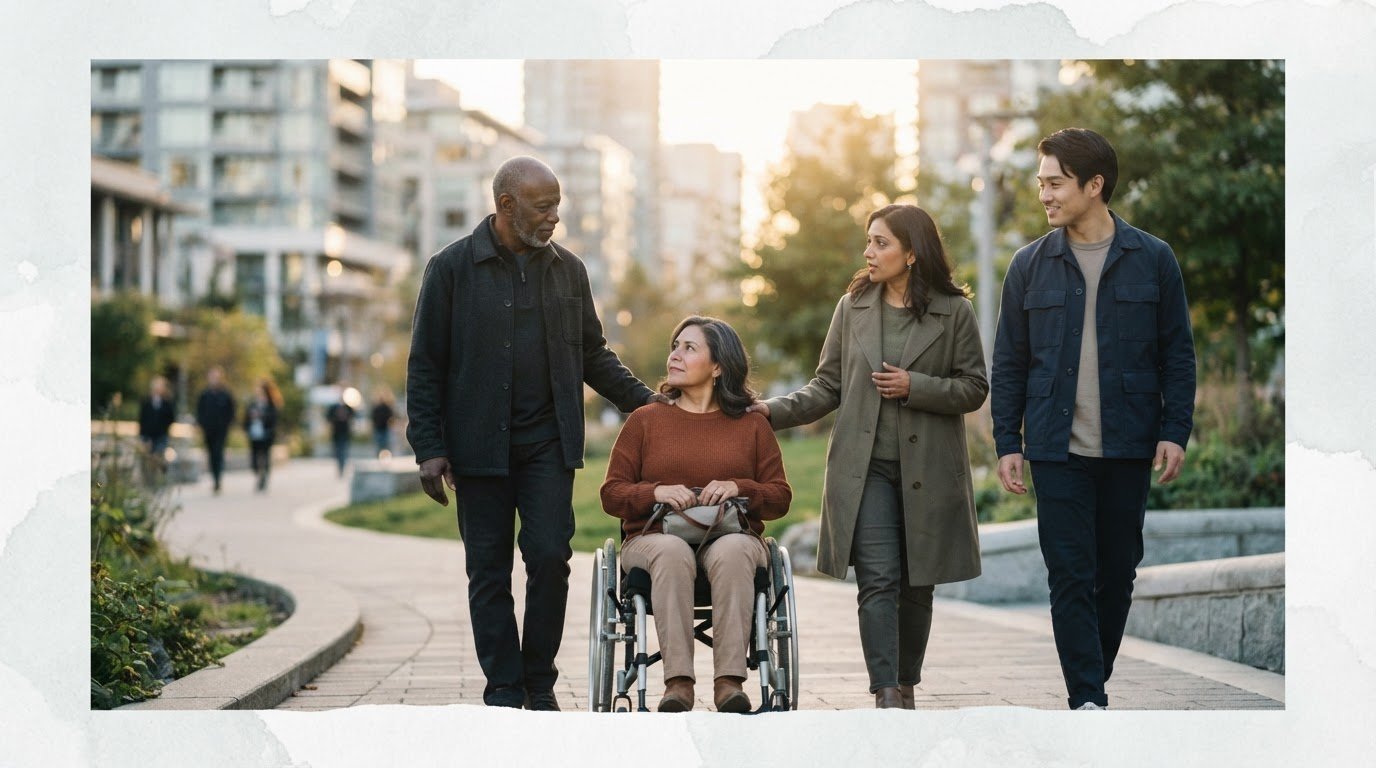
Professional guidance often feels sterile because it lacks the grit of lived experience. A "vulnerable peer" doesn't just offer a checklist; they offer a shared history. Finding community in episodes of the I'm Still Rolling Podcast provides a space where the gravity of life-altering challenges is acknowledged without descending into pity. When you're vetting support groups, look for those that are "resilience-focused" rather than just "grief-focused." A resilience-focused group acknowledges the pain but prioritizes the discovery of meaning within the struggle, ensuring you leave feeling empowered rather than just drained.
Setting Boundaries in the Long Haul
Evaluating your own capacity requires a cold, hard look at the data of your daily life. It’s about recognizing when the "invisible" cognitive load has exceeded your bandwidth. Communicating this to "MIA" family members requires clarity rather than plea-bargaining; instead of asking for "help," state the specific hours and tasks required to maintain the household. Practical respite must go beyond a 15-minute bath. It involves dedicated time where your phone is off and your identity as a caregiver is temporarily suspended. By documenting your needs and sharing your caregiver burnout stories with those around you, you force the "shadow epidemic" into the light. To begin your own journey of narrative reclamation, subscribe to our newsletter for deep-dive resources that help you navigate the messy middle with realistic optimism.
Resilience in the Messy Middle: The I'm Still Rolling Podcast Approach
Navigating the emotional shift of a new physical disability requires more than just medical equipment. It demands a fundamental restructuring of one's internal world. Janice Wright and Mike Sugerman don't just observe this process from the sidelines; they live it every day. Mike’s journey with a spinal cord injury and Janice’s experience navigating the complexities of family caregiving have forged a perspective that is both professionally rigorous and deeply personal. By documenting these caregiver burnout stories with an unflinching eye, the I'm Still Rolling Podcast provides a roadmap for others caught in the "messy middle" of long-term care.
Our approach is built on a foundation of realistic optimism. This isn't the superficial cheerfulness found in greeting cards. It is a grounded, soulful connection that acknowledges the gravity of life-altering challenges without descending into pity. We focus on "life after adversity," exploring how resilience is built in the quiet, difficult hours between the major milestones. It's a blend of professional journalistic authority and the open-hearted support of a peer who truly understands the weight of the journey.
Deep-Dives Over Quick Fixes
We deliberately favor unhurried, methodical conversations because quick fixes often fail to address the complexities of the human condition. In a world that demands instant recovery, we provide the space for reflection and the slow build-up of emotional resonance. This deep-dive philosophy allows us to look beyond the clinical data to the nuances of interpersonal relationships and internal endurance. For those looking to understand the broader context of this journey, our collection of Spinal Cord Injury Recovery Stories offers insights that go far beyond what you'll find on a medical chart. Integrating this kind of realistic optimism into your weekly routine can be a vital tool for survival.
Join the Resilience Community
The newsletter from the I'm Still Rolling Podcast acts as a continued guide through the messy parts of life, offering deep-dive journalistic insights that you can't find elsewhere. By subscribing, you gain access to podcast transcripts and resources designed to help you reclaim your narrative from the weight of a diagnosis. We invite you to join this conversation and share your own experience within our community. Your story is a vital piece of the puzzle. By speaking it aloud, you help break the cycle of isolation for everyone. You don't have to roll alone. You are still rolling, and we are right here with you. To start your journey toward narrative healing, listen to our latest podcast episodes and discover the strength in our shared truth.
Reclaiming Your Life Beyond the Caregiver Label
The weight of caregiving doesn't have to be a solitary sentence served in silence. By dismantling the myths of the perfect sacrifice and acknowledging the abrasive reality of compassion fatigue, you begin the essential work of narrative healing. We've explored how caregiver burnout stories act as both a mirror and a map; they guide us away from the "saintly" trope and toward a sustainable, honest life. Resilience isn't about the absence of a breakdown. It's about the steady, reliable pulse of a community that understands the "messy middle" of long-term care.
Our mission at I'm Still Rolling Podcast is to provide a safe space for this unflinching honesty. Hosted by award-winning journalists with direct experience in the worlds of SCI, Alzheimer's, and trauma, we offer more than just advice. We offer a seat at the table with fellow travelers who prioritize realistic optimism over superficial cheer. You don't have to navigate this landscape without a guide. Listen to I'm Still Rolling Podcast and Join Our Resilience Community to find stories of life after adversity and the strength to keep moving forward. You're still rolling, and your voice matters.
Frequently Asked Questions
Is it normal to feel resentment toward the person I am caring for?
Yes, feeling resentment is a common and human response to the relentless demands of long-term care. It often stems from a loss of personal agency rather than a lack of love. Acknowledging this "messy" truth is the first step toward reclaiming your mental health. Don't mistake this emotional exhaustion for a character flaw; it's a symptom of a system that asks too much of a single individual.
How do I know if I have caregiver burnout or just temporary stress?
Temporary stress feels like having too much on your plate, while burnout feels like having no plate left at all. Stress is often fueled by urgency and the belief that if you just work harder, you'll catch up. Burnout is a state of total depletion where you feel detached and hopeless. If your exhaustion persists even after a full night's sleep, you're likely facing a burnout crisis.
What is the difference between burnout and compassion fatigue?
Burnout is a general state of physical and mental exhaustion, but compassion fatigue is the specific loss of your ability to empathize. It is often described as the "dark place" where you feel indifferent to the suffering of your loved one. While burnout affects your productivity, compassion fatigue strikes at the heart of your relationships, making it harder to provide the emotional care you once gave freely.
Can I really take a break if there is no one else to help?
You can access formal support even without a local network by utilizing federal resources like the National Family Caregiver Support Program. In 2026, the Lifespan Respite Care Program received $11 million in funding specifically to help people in your position. These grants can provide professional temporary care, allowing you to step away. Don't wait for a volunteer to appear; seek out the institutional support designed for this struggle.
How can I explain my burnout to family members who aren't helping?
Shift the conversation from emotional pleas to a factual report of your current capacity and limits. Instead of asking for "help," present a list of specific tasks that require coverage to prevent a total household collapse. Use a journalistic approach to state the data: the hours worked, the sleep lost, and the medical needs. Setting these radical boundaries forces family members to see caregiving as a shared responsibility.
Where can I find real stories from other caregivers that aren't just 'tragic'?
You can find authentic caregiver burnout stories on platforms like the I'm Still Rolling podcast, where we prioritize raw truth over "tragic" tropes. Our episodes focus on the lived experience of navigating life after a diagnosis, offering a blend of professional rigor and peer intimacy. These narratives provide a mirror for your own struggle, showing that resilience is found in the messy reality of daily endurance rather than superficial cheerfulness.
What are the first steps to take when I feel I can't go on?
The first step is to voice the truth of your situation to a trusted professional or a crisis counselor. Admitting you can't go on isn't a betrayal; it's a necessary alarm bell. Reach out to local support groups or use the National Family Caregiver Support Program resources to identify immediate respite options. Securing your own safety and mental stability is the only way to ensure the continued safety of your loved one.
How does the I'm Still Rolling podcast help with caregiver mental health?
The I'm Still Rolling podcast provides a safe space where you can hear your own caregiver burnout stories reflected and validated by seasoned journalists. We move beyond "disability tropes" to explore the intersection of internal resilience and systemic reality. By offering "realistic optimism" and deep-dive conversations, we help you reframe your journey. This connection to a community that "gets it" reduces isolation and provides the roadmap needed for the long haul.

Comments